UCCA Beijing Open Today, 10:00-19:00 (Final entry: 18:30)
UCCA Dune Closed Today,
UCCA Clay Open Today, 9:00-18:00 (Final entry: 17:30)
UCCA Beijing
Michael Cherney: Middle Distance
2026.1.17 - 2026.4.12
About
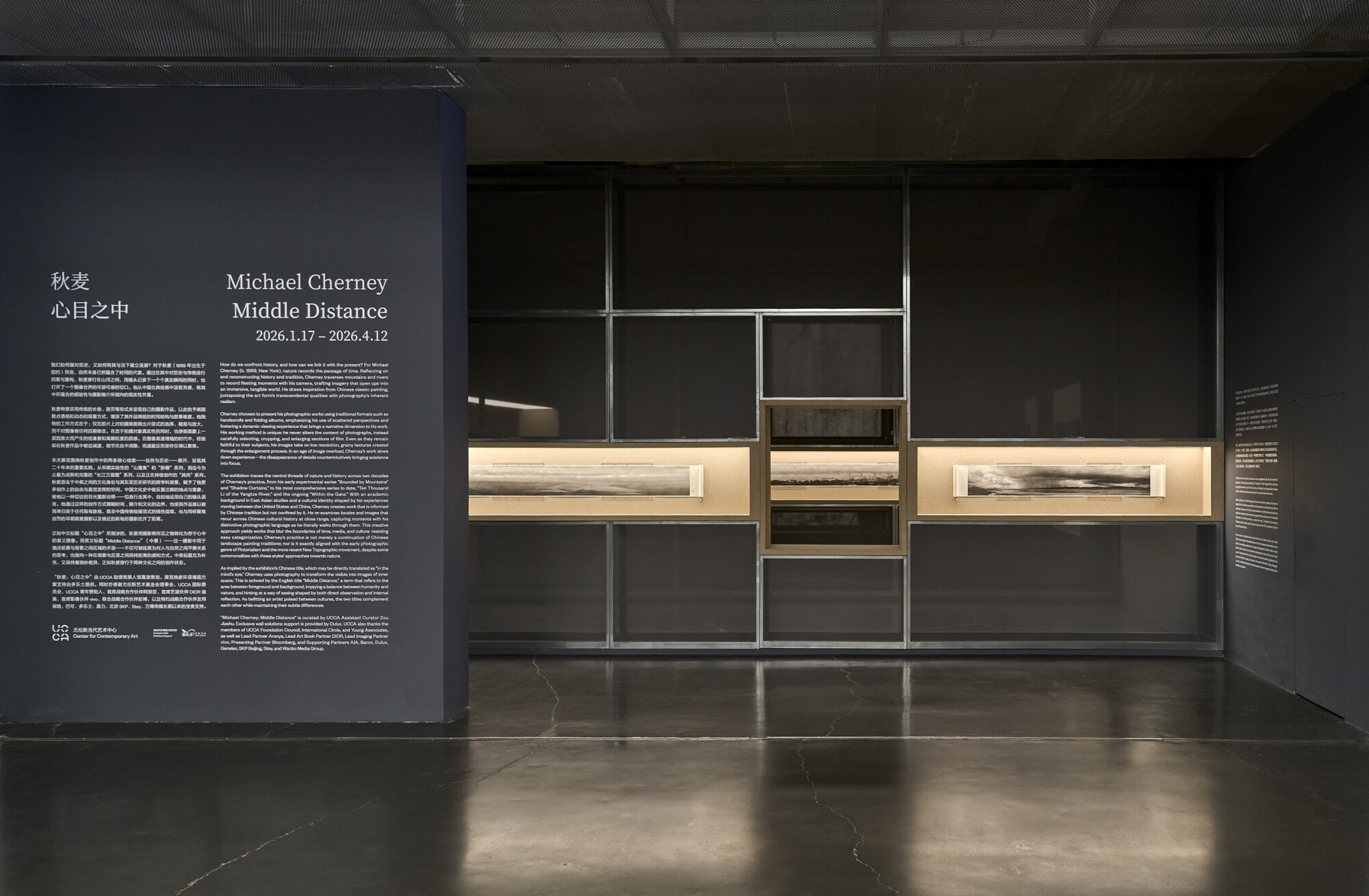
From January 17, 2026, to April 12, 2026, UCCA Center for Contemporary Art presents “Michael Cherney: Middle Distance.” In a comprehensive survey of Cherney’s nearly 20 years of artistic practice, the exhibition marks the first large-scale presentation of his “Ten Thousand Li of the Yangtze” series. By foregrounding this body of work, the exhibition examines how the artist uses photography as a medium to weave together geography, historical memory, and the act of seeing into a distinctive visual system.
From January 17, 2026, to April 12, 2026, UCCA Center for Contemporary Art presents “Middle Distance,” a solo exhibition by American artist Michael Cherney (b. 1969, New York). The exhibition surveys nearly two decades of Cherney’s practice, bringing together more than twenty major works, including the artist’s celebrated series “Ten Thousand Li of the Yangtze River” created between 2010 and 2015. Spanning subjects from the microscopic to the monumental, from historical relics to natural landscapes, the works encompass a range of formats—handscrolls, album pages, and hanging scrolls—showcasing how the artist uses photography as a sustained dialogue between the lived world and classical Chinese visual perspectives. “Middle Distance” highlights the artist’s perspective as it is shaped by his working methods, through which framing, cropping, and shifts in scale expand photography’s temporal dimension and create a visual language situated between photography and painting. This exhibition is curated by UCCA Assistant Curator Jiashu Zou.
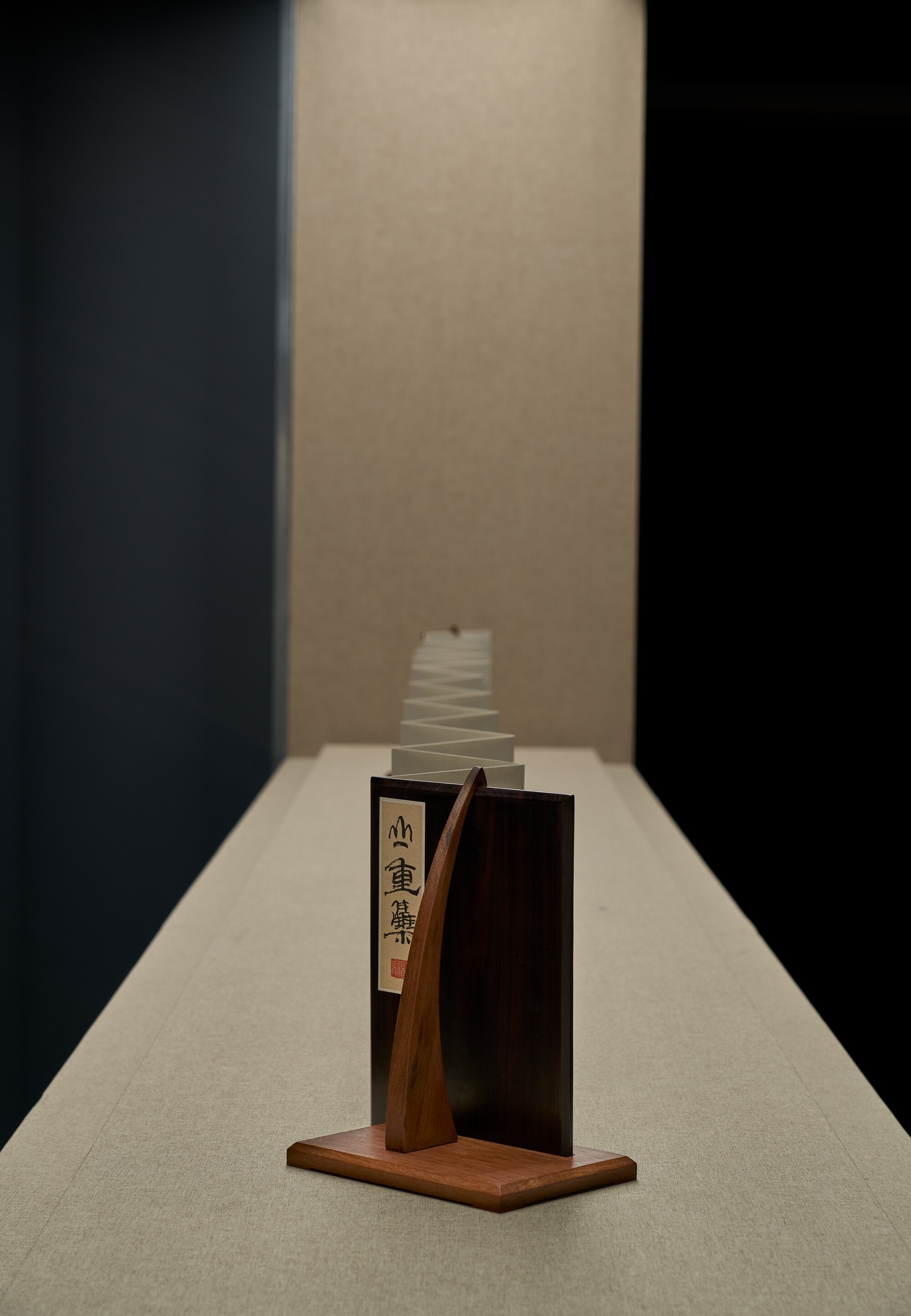
Since the mid-1990s, Cherney has worked primarily with photography, traveling extensively across China’s rivers and mountains, historical sites, and urban landscapes. His practice focuses on those vistas that continually emerge, vanish, and reappear over the passage of time. For Cherney, photography is both an astute response to the immediacy of reality and an extended inquiry into the relationship between perception and temporality. Through fragmentation, juxtaposition, and continuous unfolding, while deliberately softening sharpness and details, his images appear in a state between the blurred and the distinctively visible. This approach opens up the work to narrative possibilities for the viewers’ own perception and imagination. Drawing on perspectives and formats from traditional Chinese painting such as albums, handscrolls, and screen panels, Cherney imbues the fixed frame with a flow of narrative rhythm, releasing photography from a singular, static frame to foster a more multidirectional and sustained experience of looking.
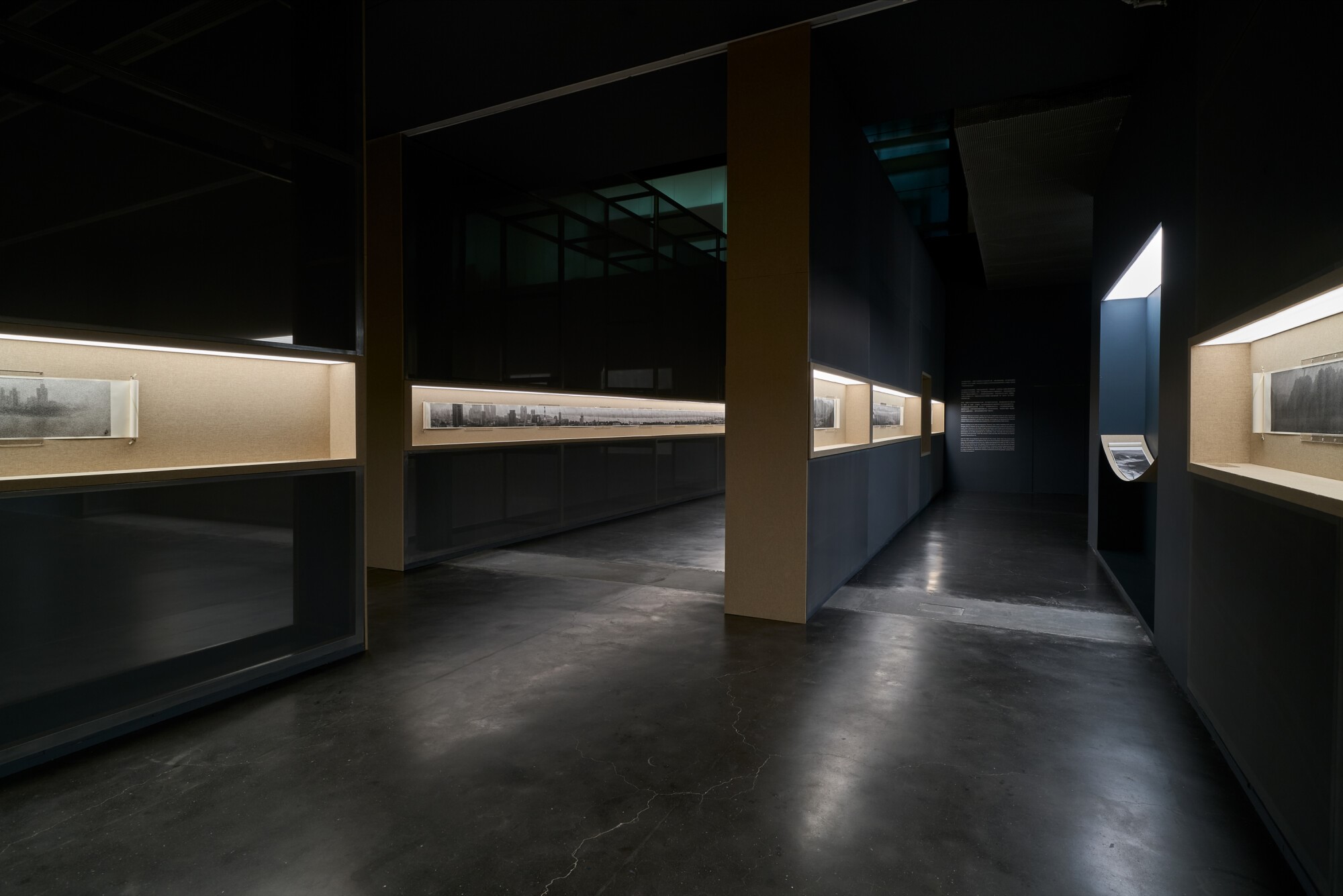
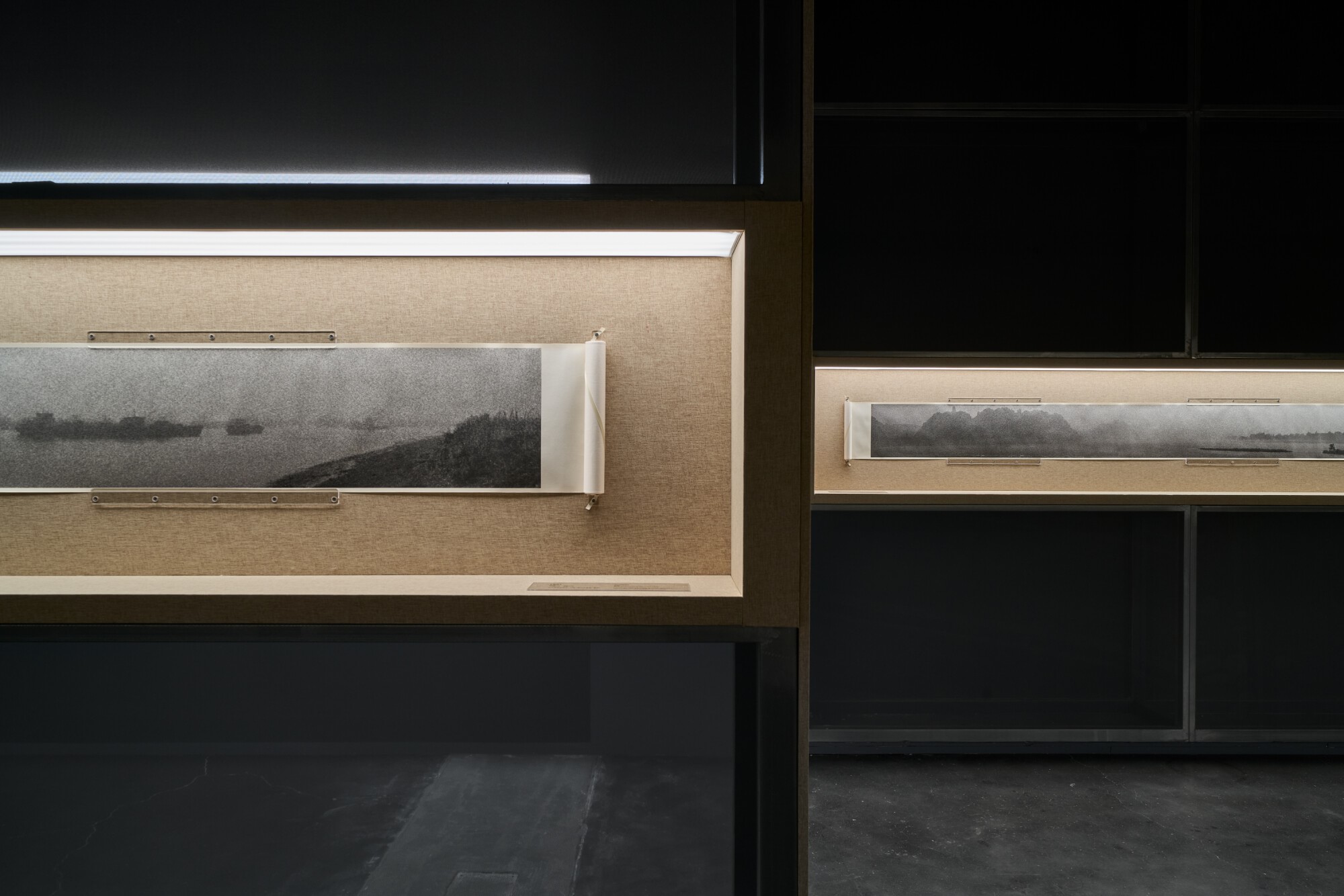
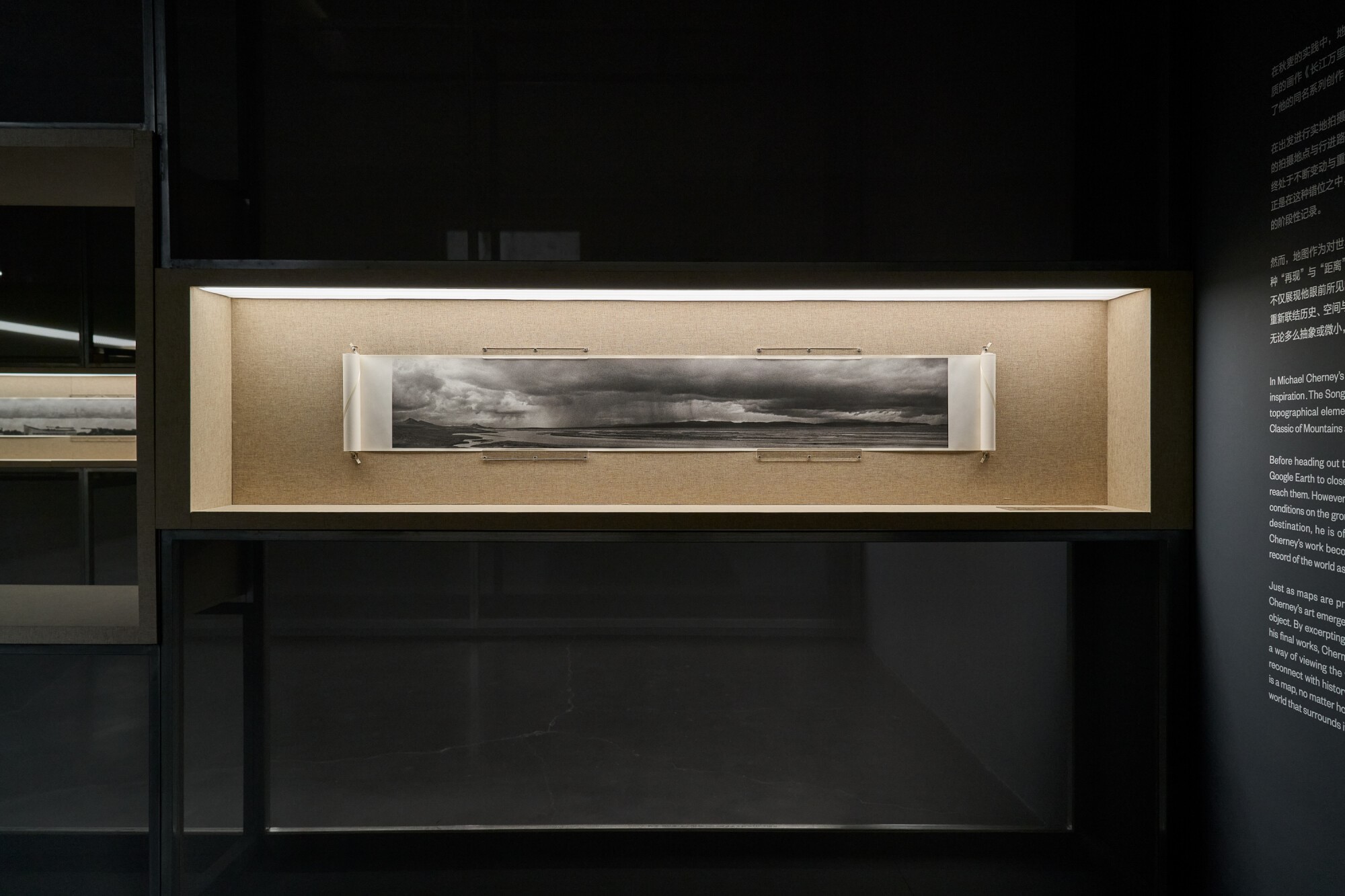
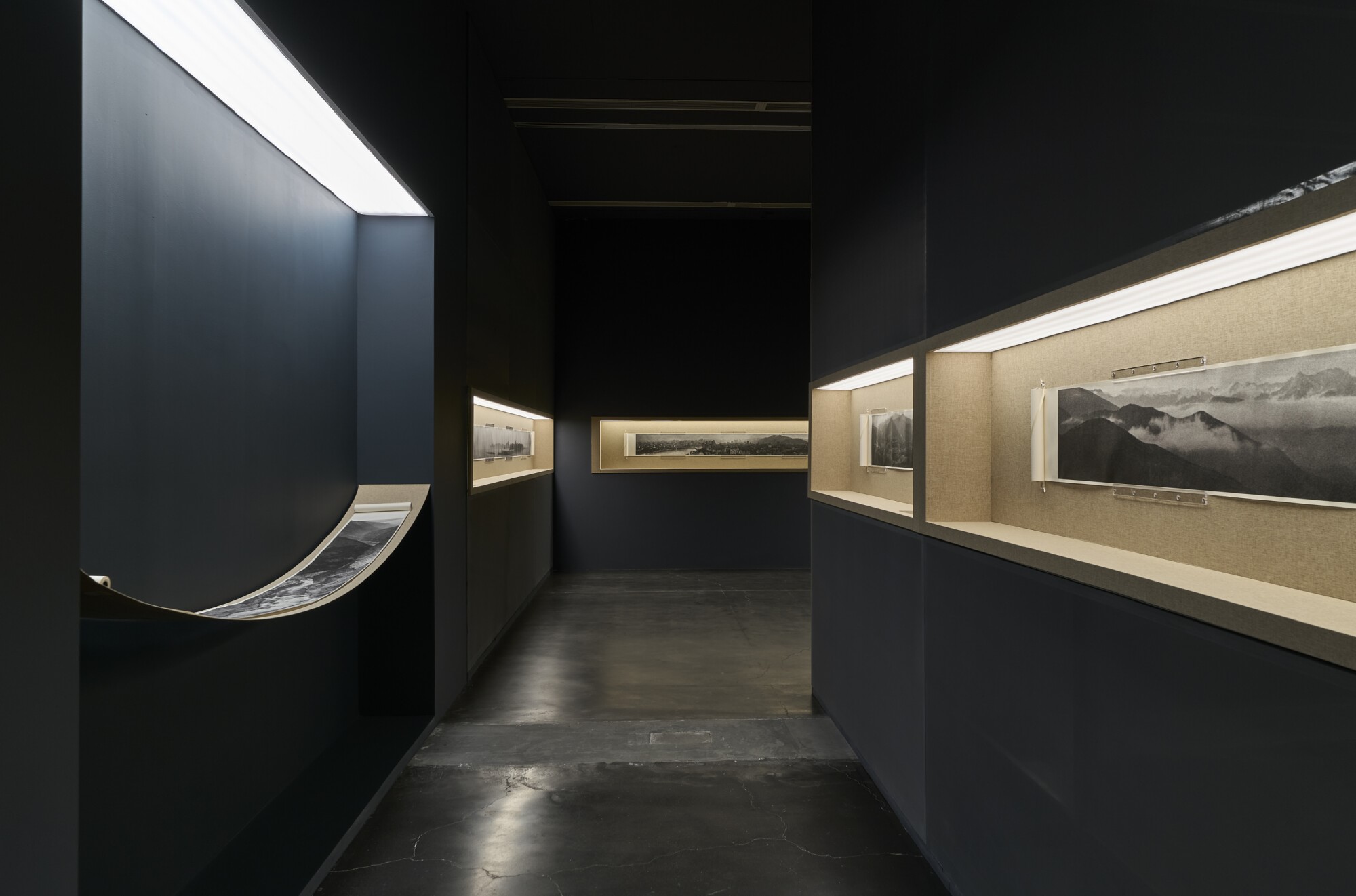
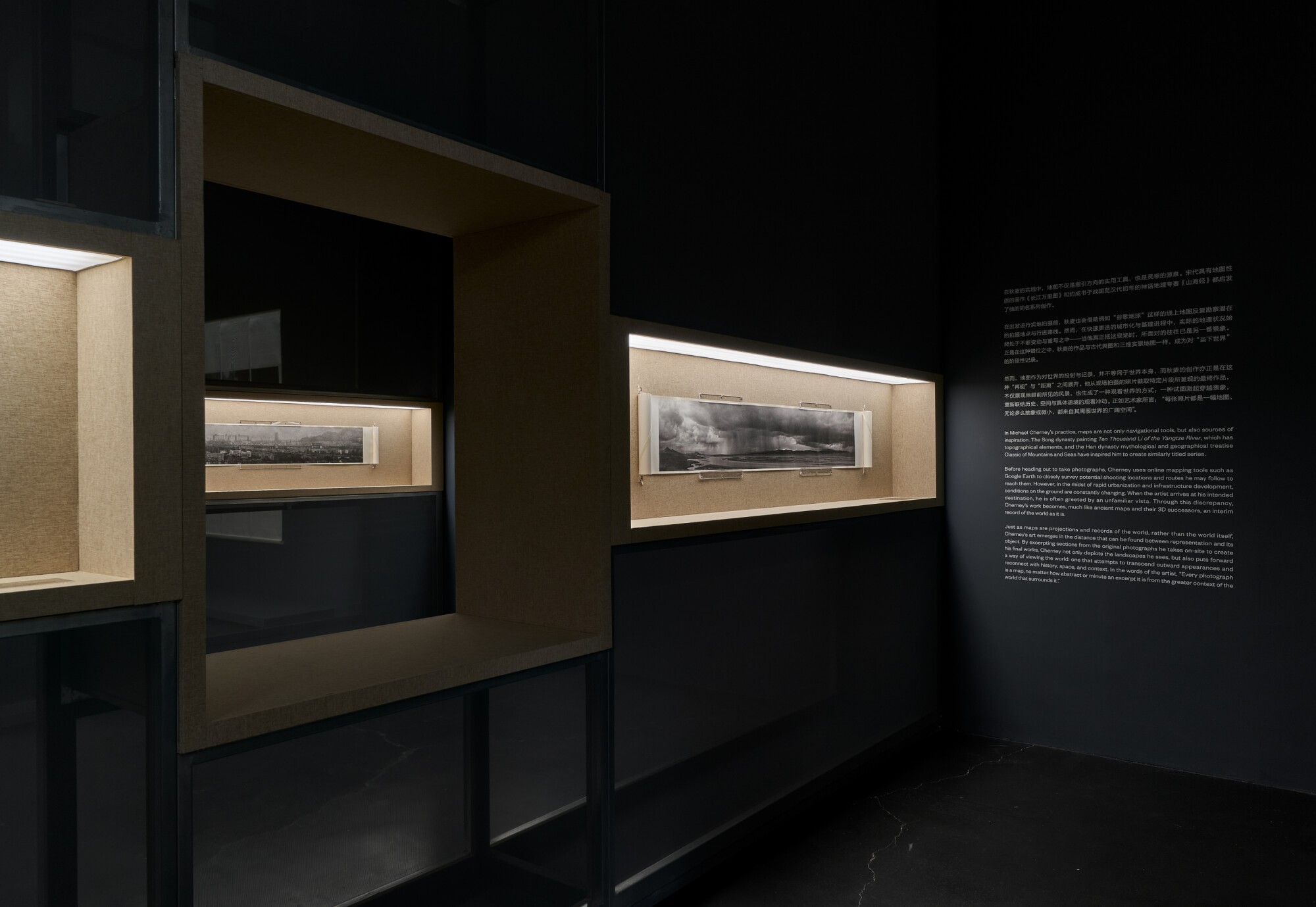
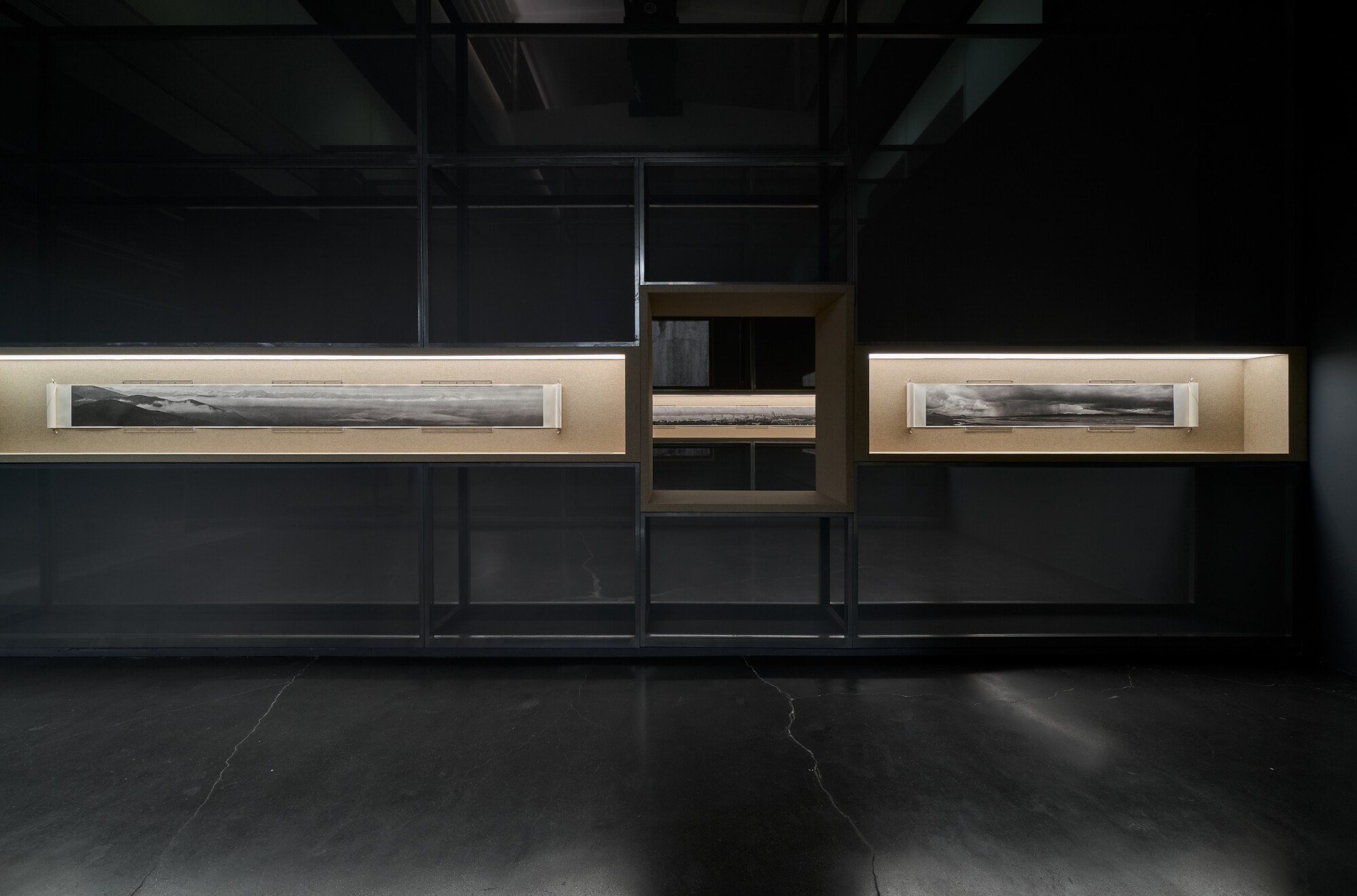
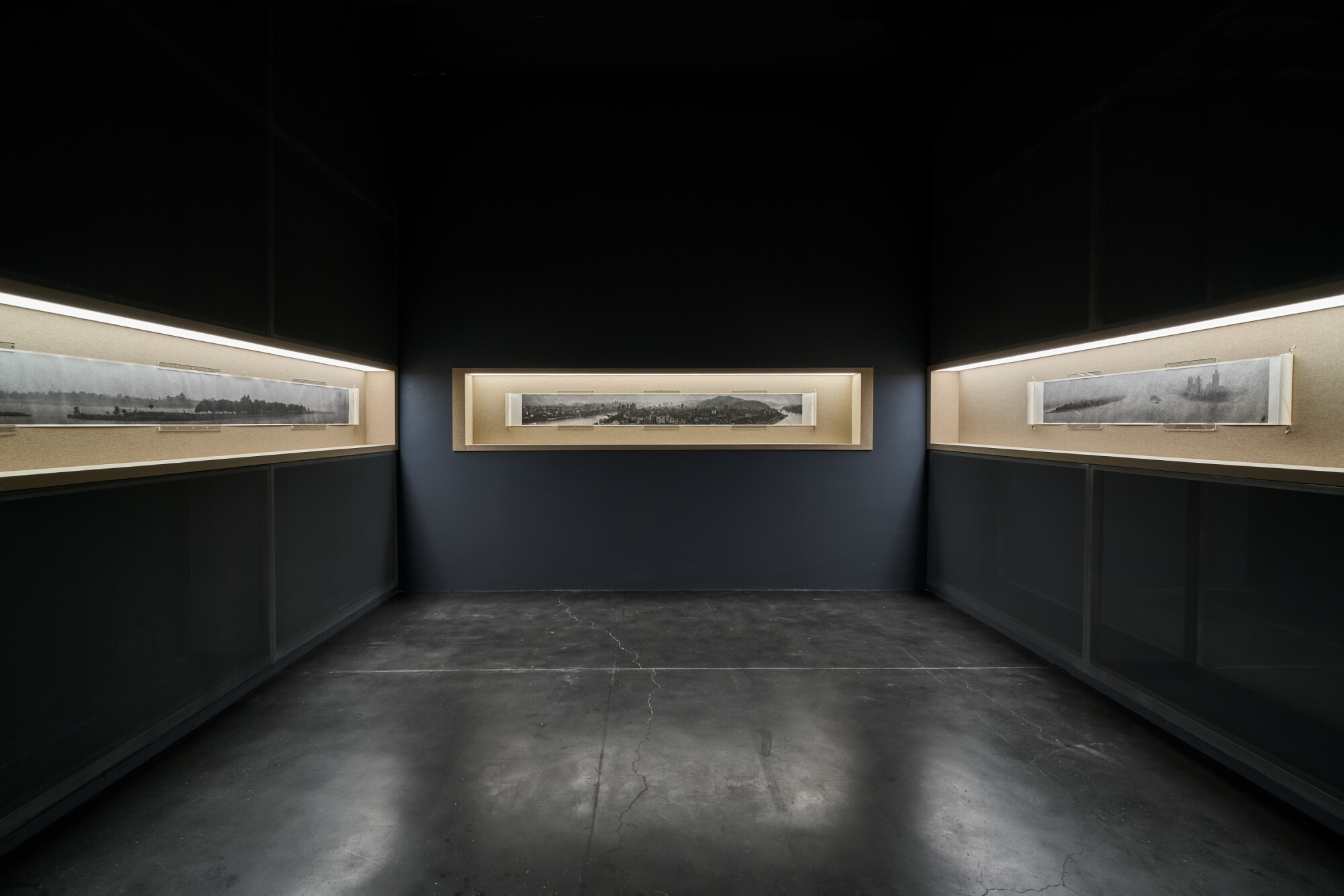
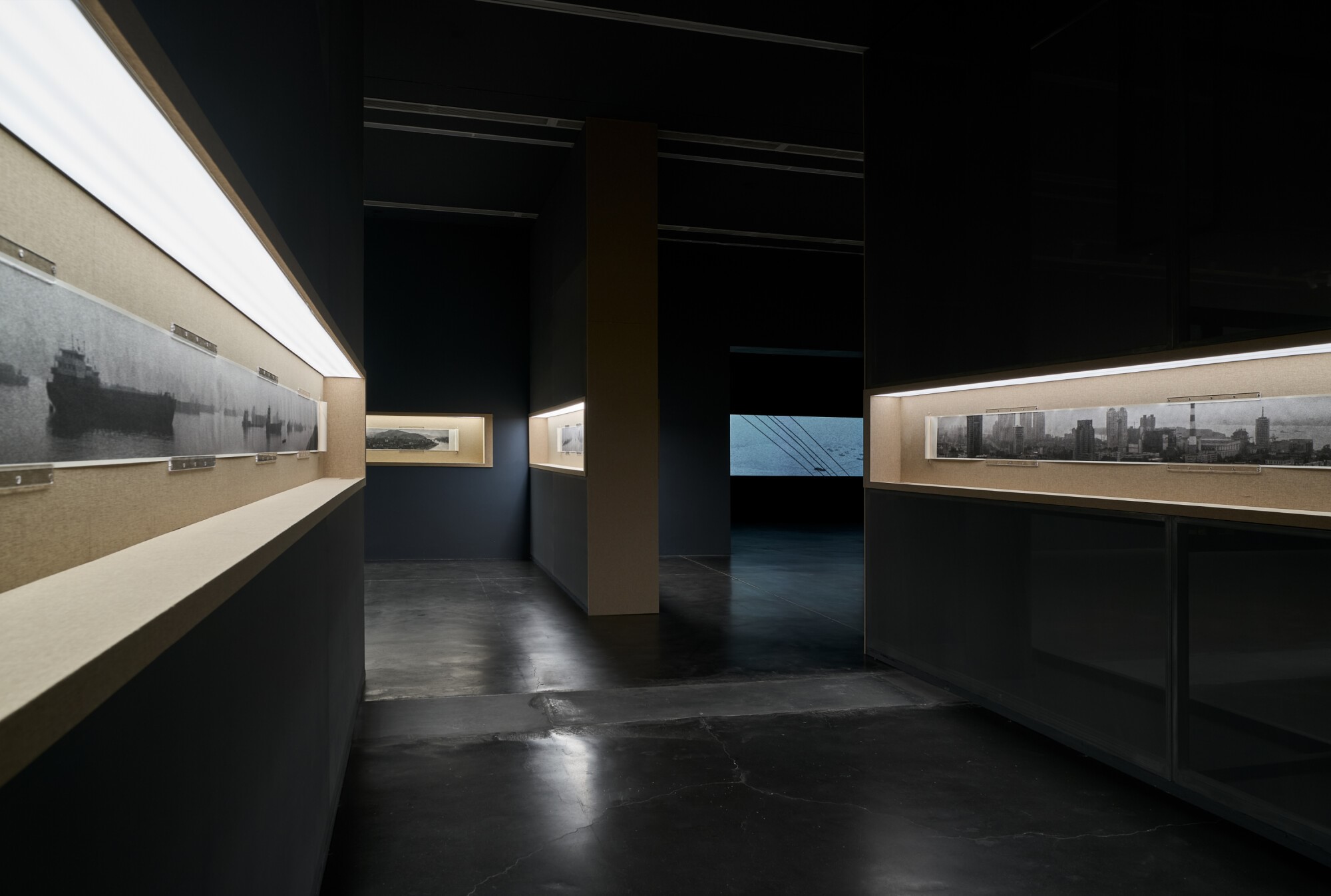
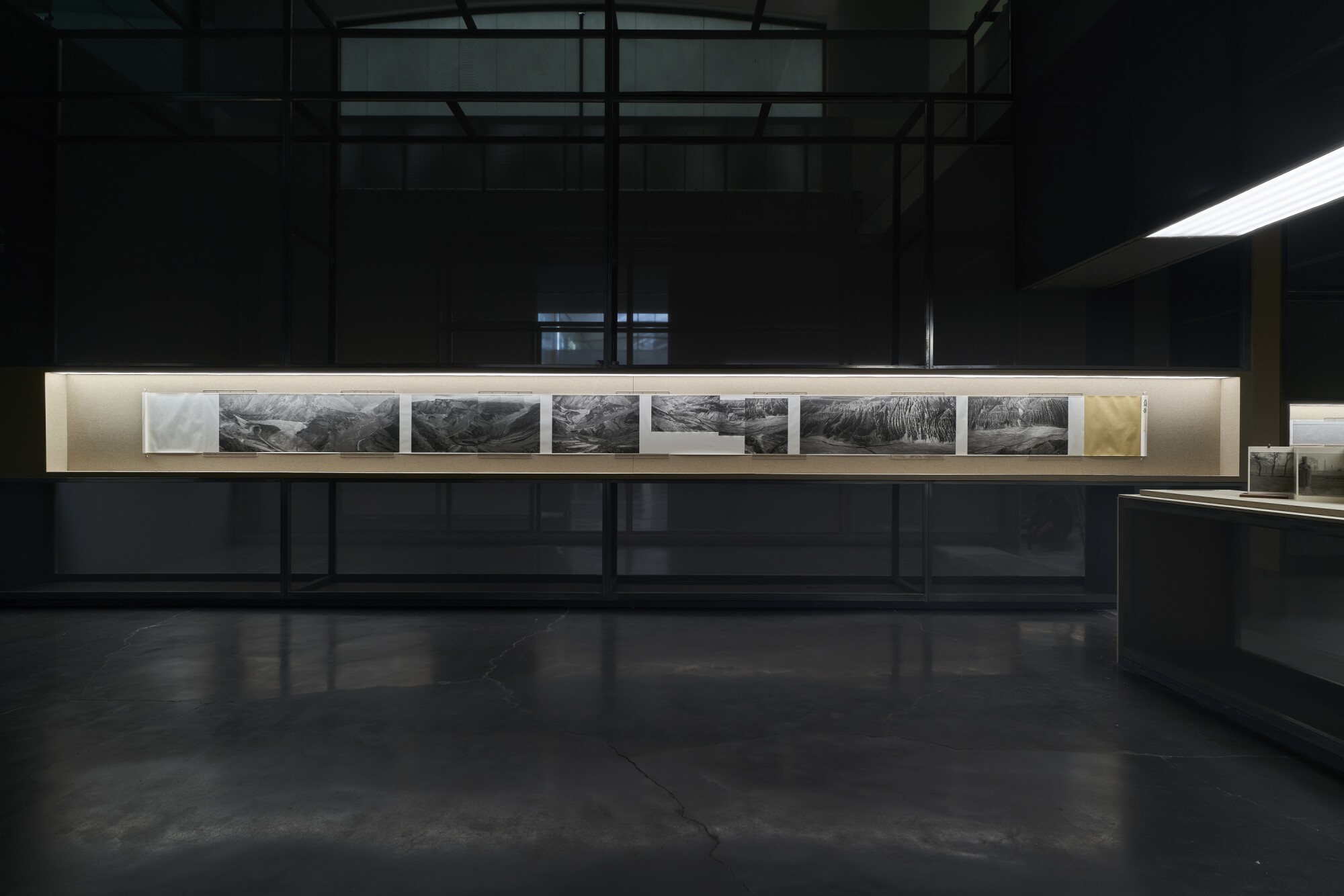
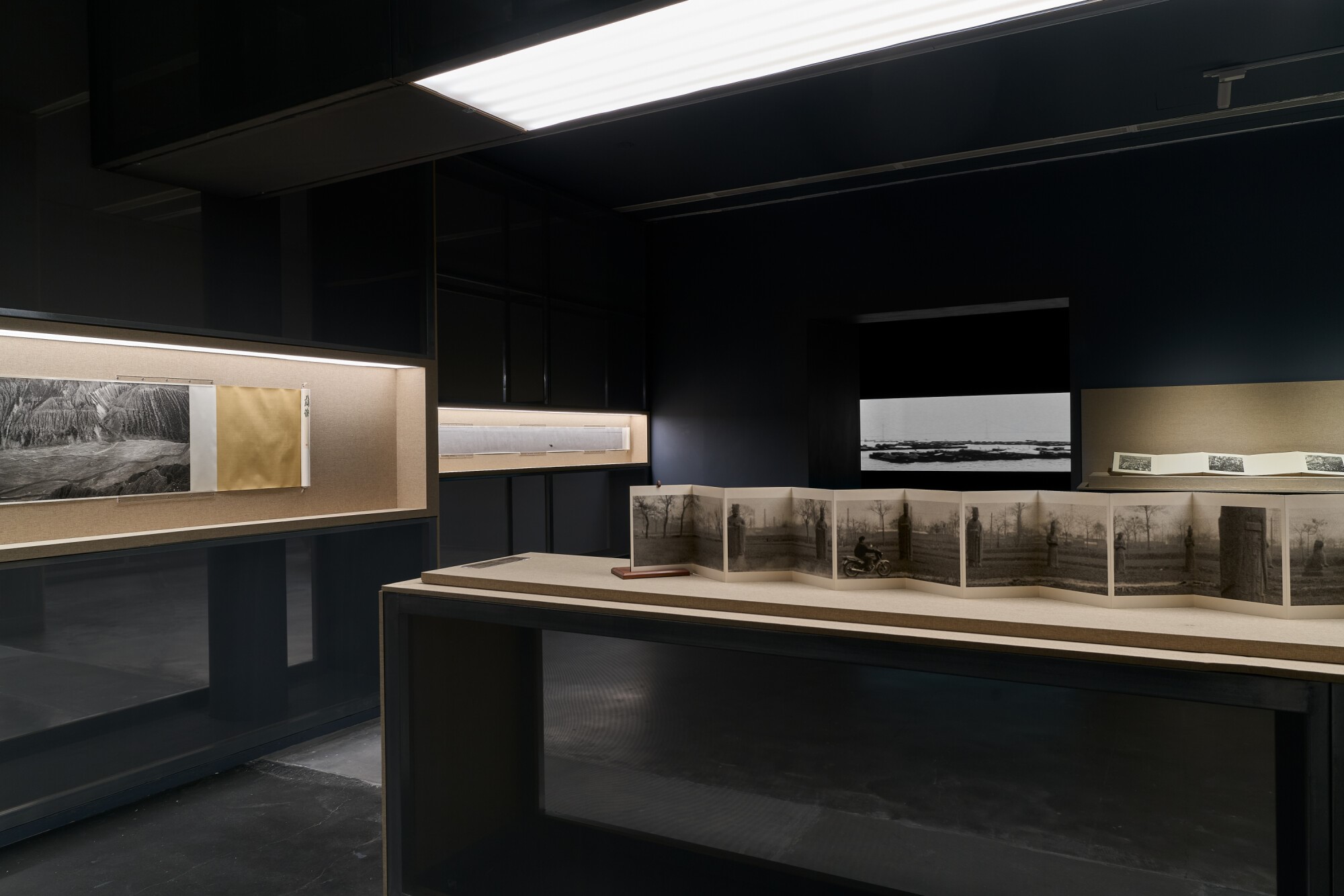
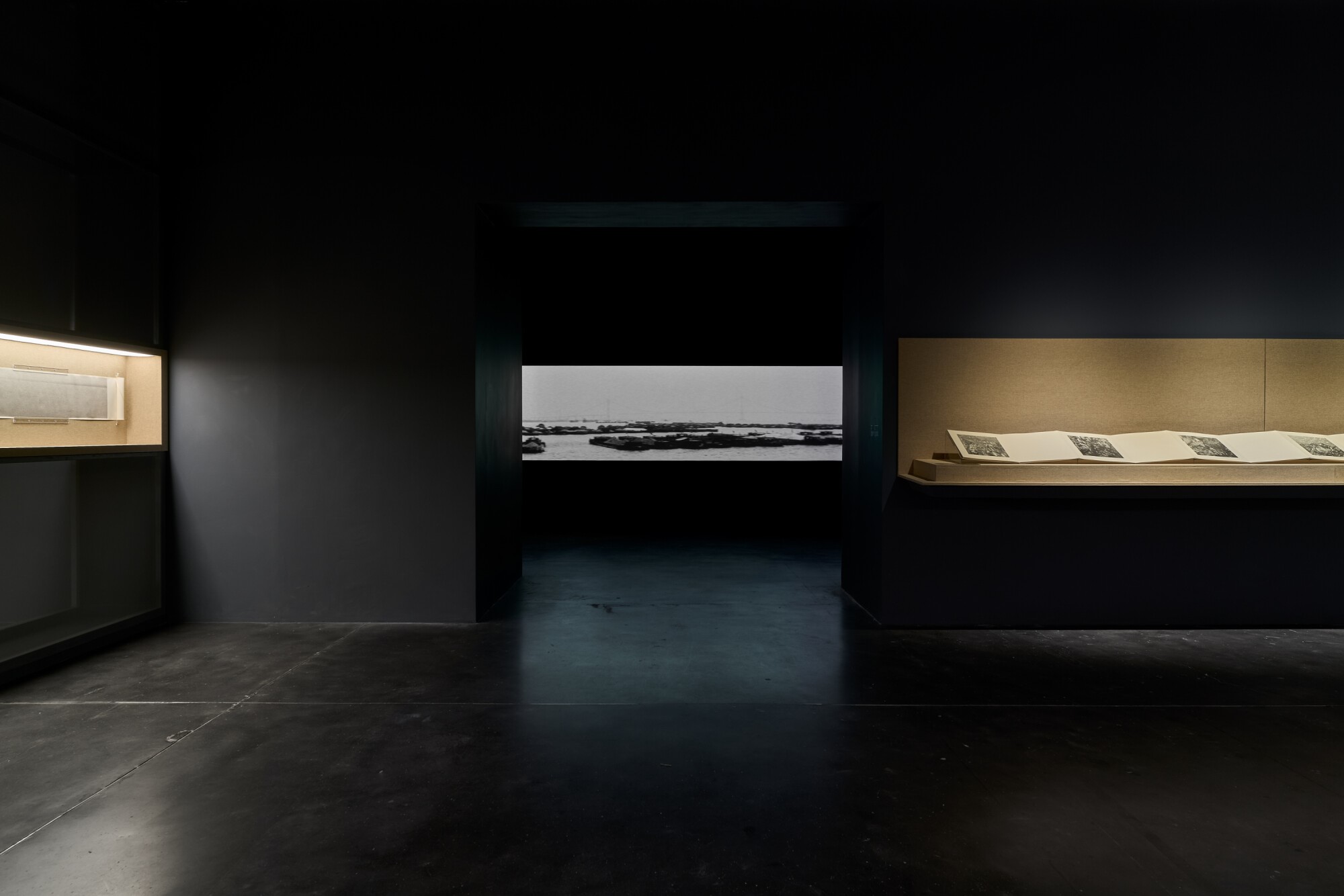
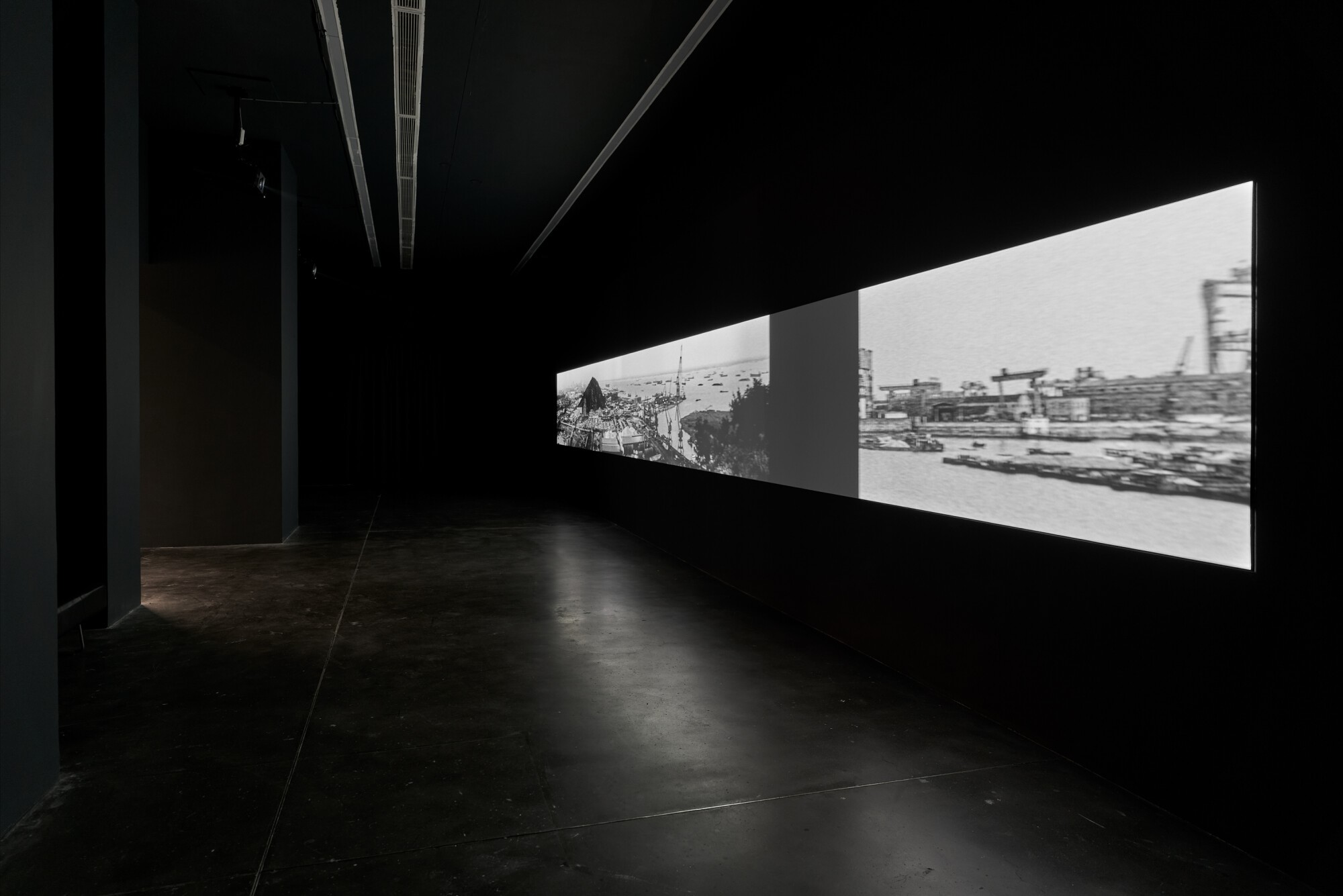
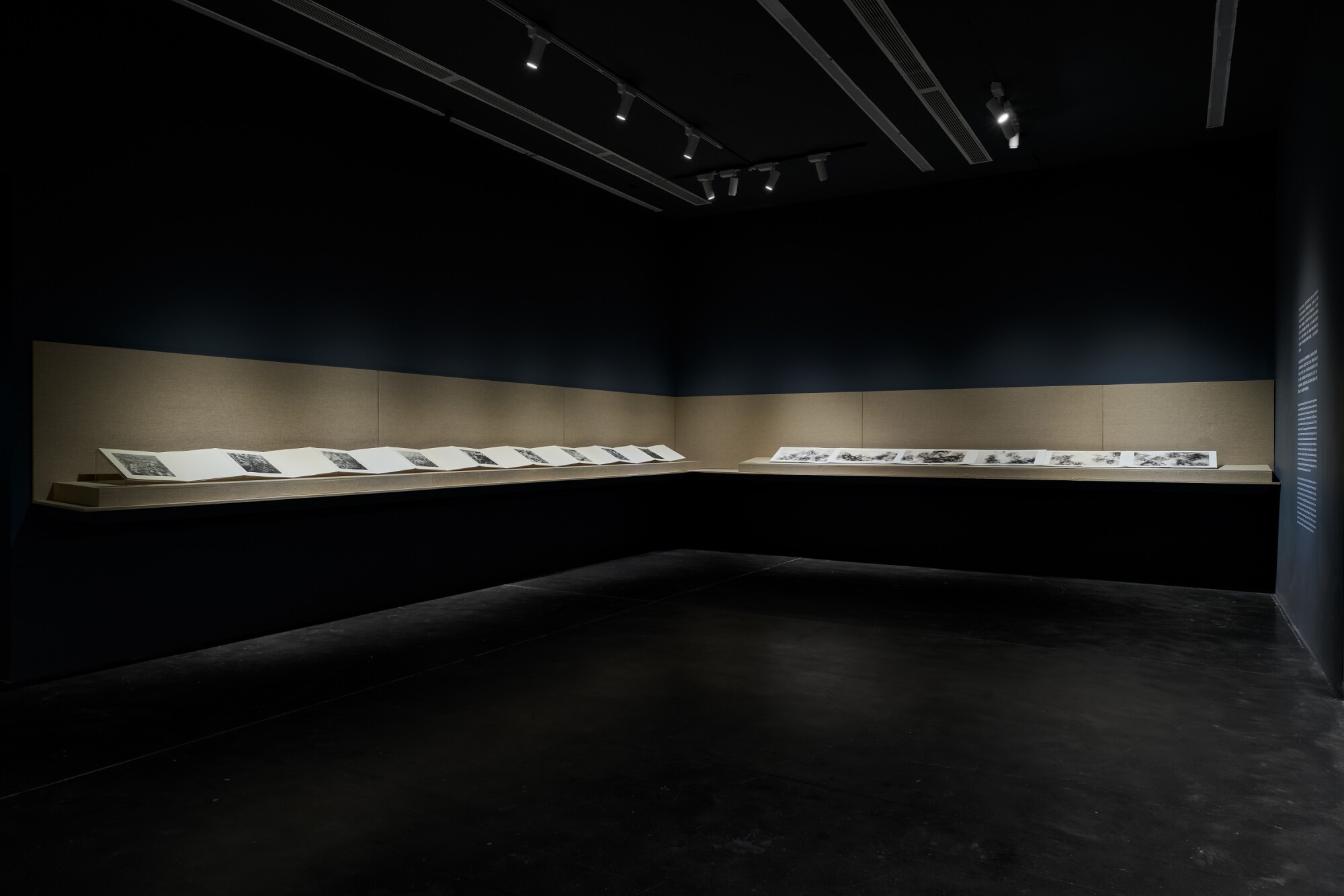
This exhibition features in particular Cherney’s “Ten Thousand Li on the Yangtze River” series (2010-2015), composed of 42 photographic works presented in a handscroll format. For the first time, twelve of these scrolls are presented together on a large scale, accompanied by a video work created in 2016 that documents the complete scroll, restoring the dynamic experience of viewing the work in motion. In preparing the series, Cherney referenced the eponymous Song-dynasty handscroll by an anonymous artist held in the collection of the Freer Gallery of Art in Washington, D.C. Using the sites depicted in the ancient scroll as points of departure, he employed satellite maps and coordinate systems to locate and plan his photographic journeys. The series traces the Yangtze River from its source to its estuary, moving from west to east across an immense geographical area. Along the way, the works capture turbulent river sections framed by mountain gorges, historically significant cities and grottoes, as well as landscapes transformed by the forces of industry and urbanization.
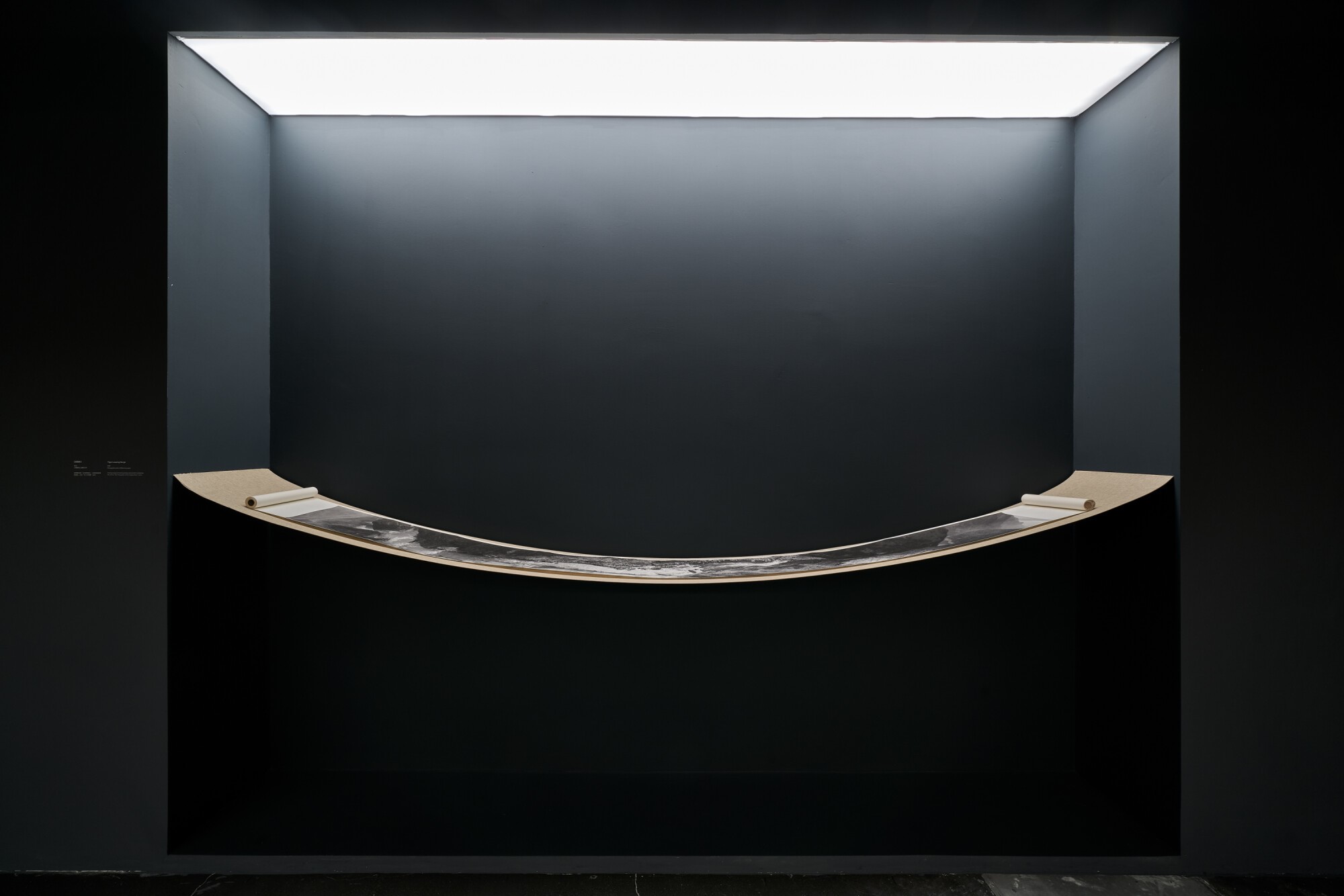
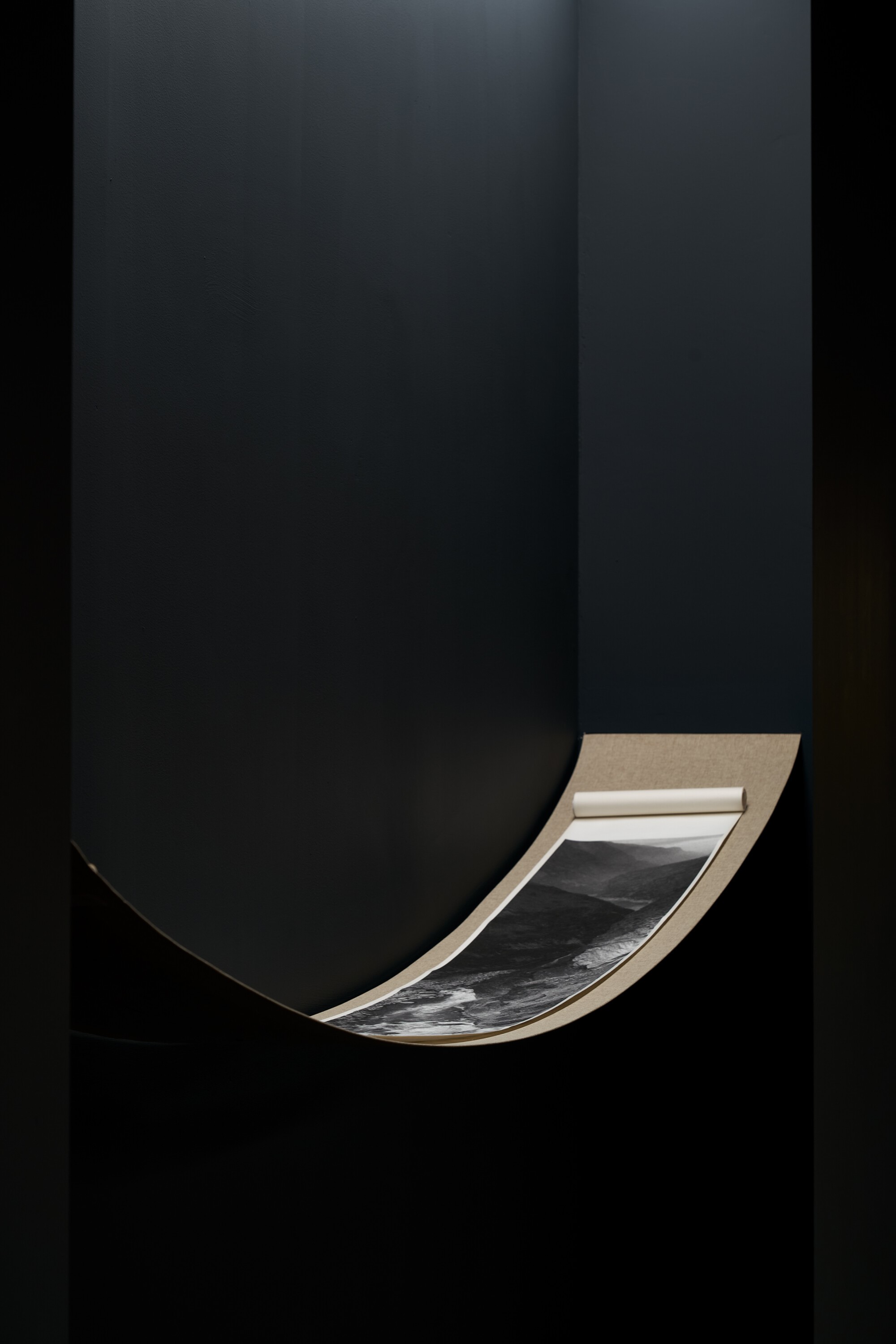
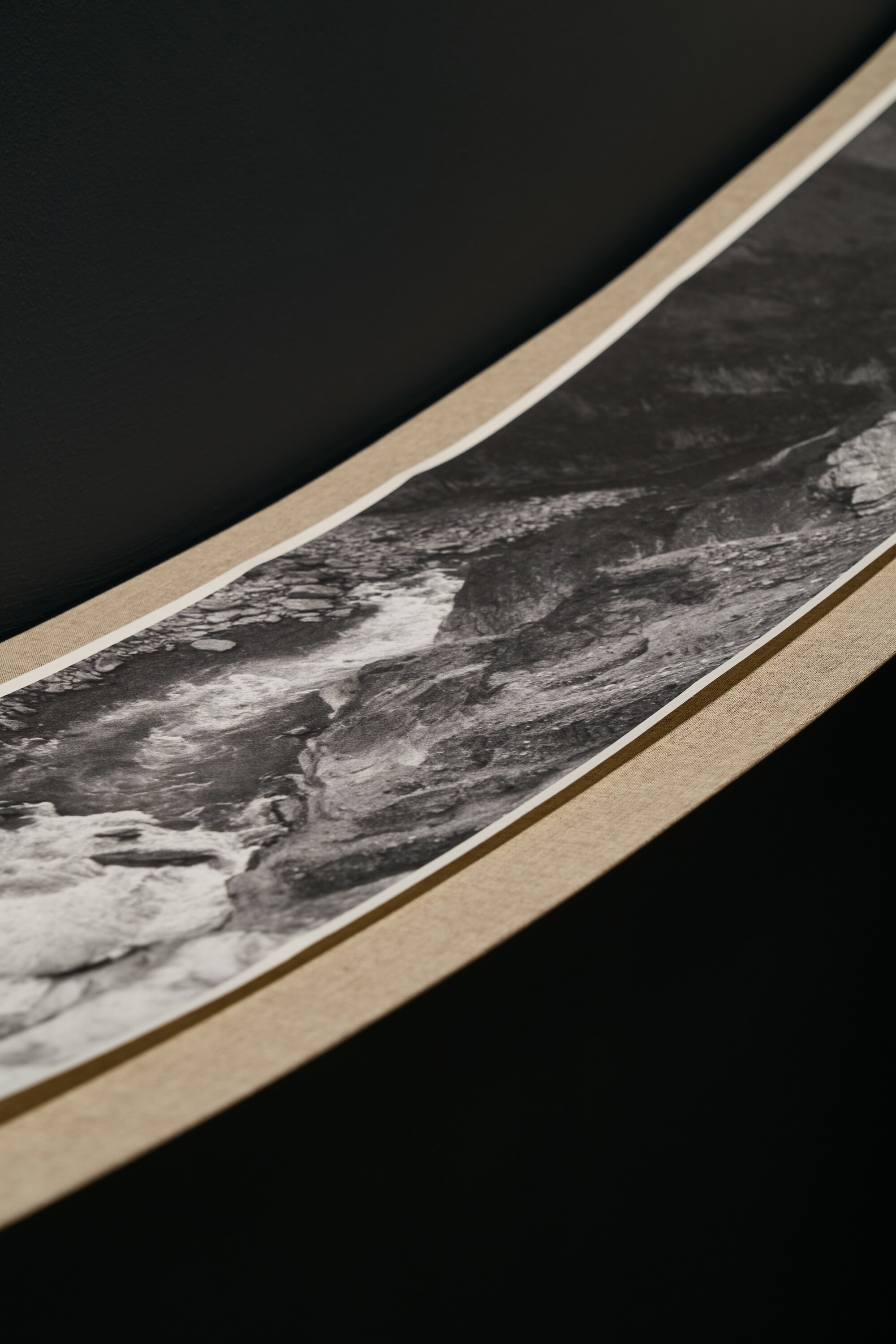
Panzhihua (2012) was photographed in Panzhihua in Sichuan province, known as “the first city on the Yangtze River.” Taken from the edge of an industrial city encircled by mountains, the composition extends outward so that the buildings and ridgelines form two opposing triangular structures. In this view, the city and the mountains are no longer set in contrast, but instead resonate with one another in a visual dialogue. In Tiger Leaping Gorge (2012), the artist uses a bird’s-eye perspective, aligning the distant mountain horizon with the river below to create a subtly dislocated spatial effect. For this exhibition, this work is displayed horizontally across a curved strip of fabric rather than vertically, restoring a sense of spatial immersion and the rushing velocity of the water implied by the camera’s original viewpoint. In Haimen (2012), photographed at the Shanghai Yangtze River Bridge, the expansive waters at the river’s estuary nearly dissolve the horizon line. Only a sand barge that unexpectedly enters the lower right of the frame remains as a trace of the present era.
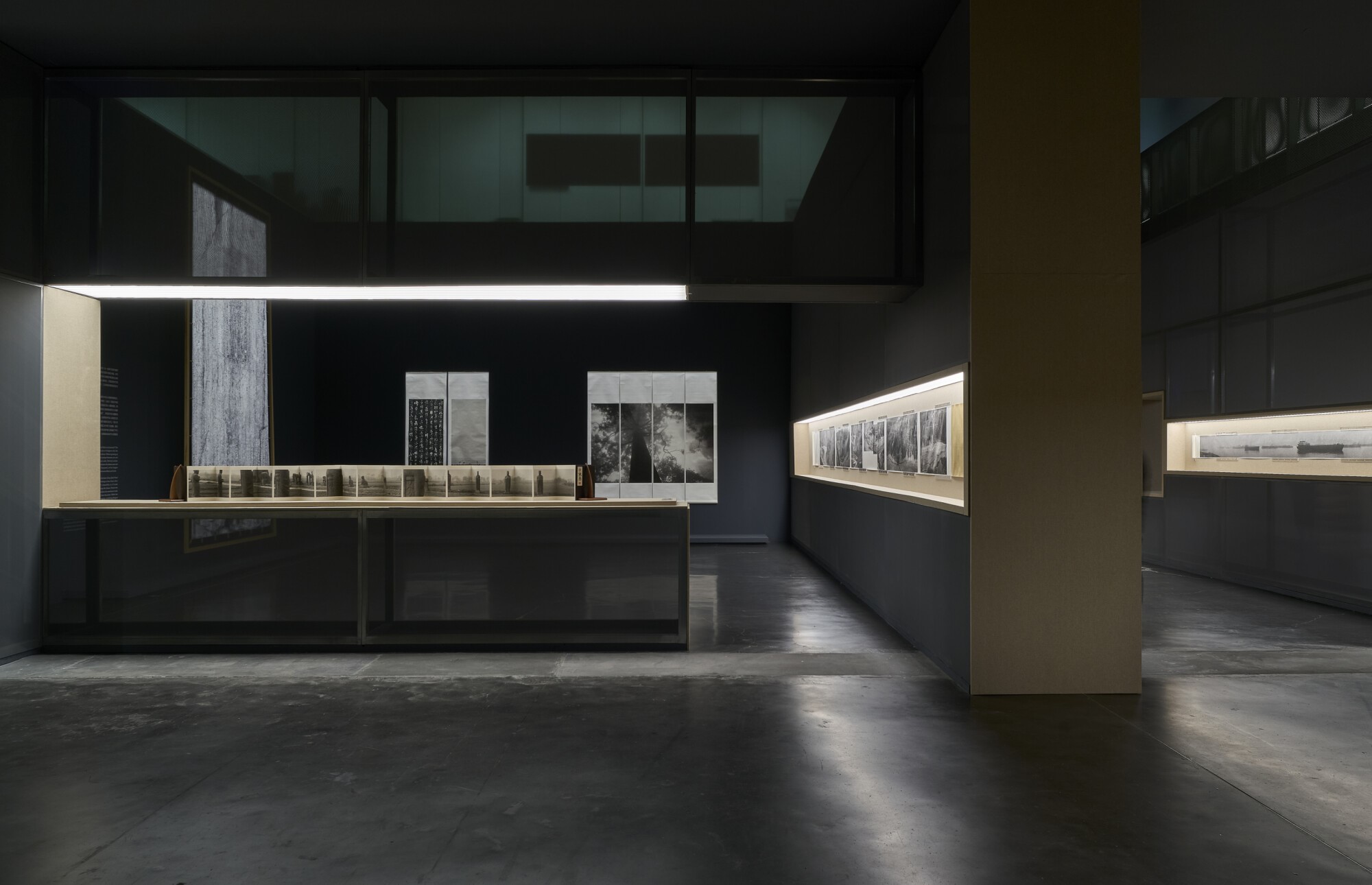
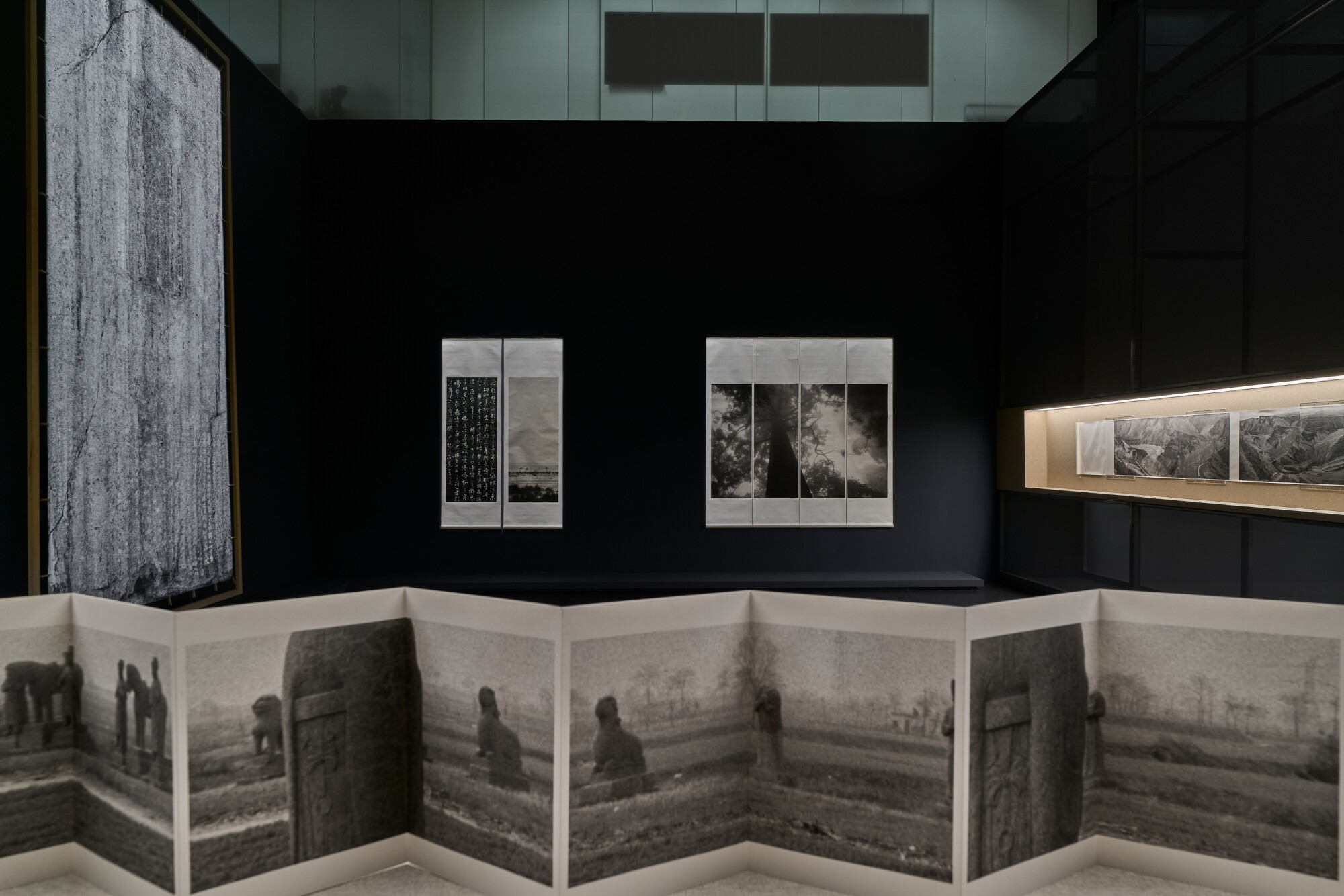
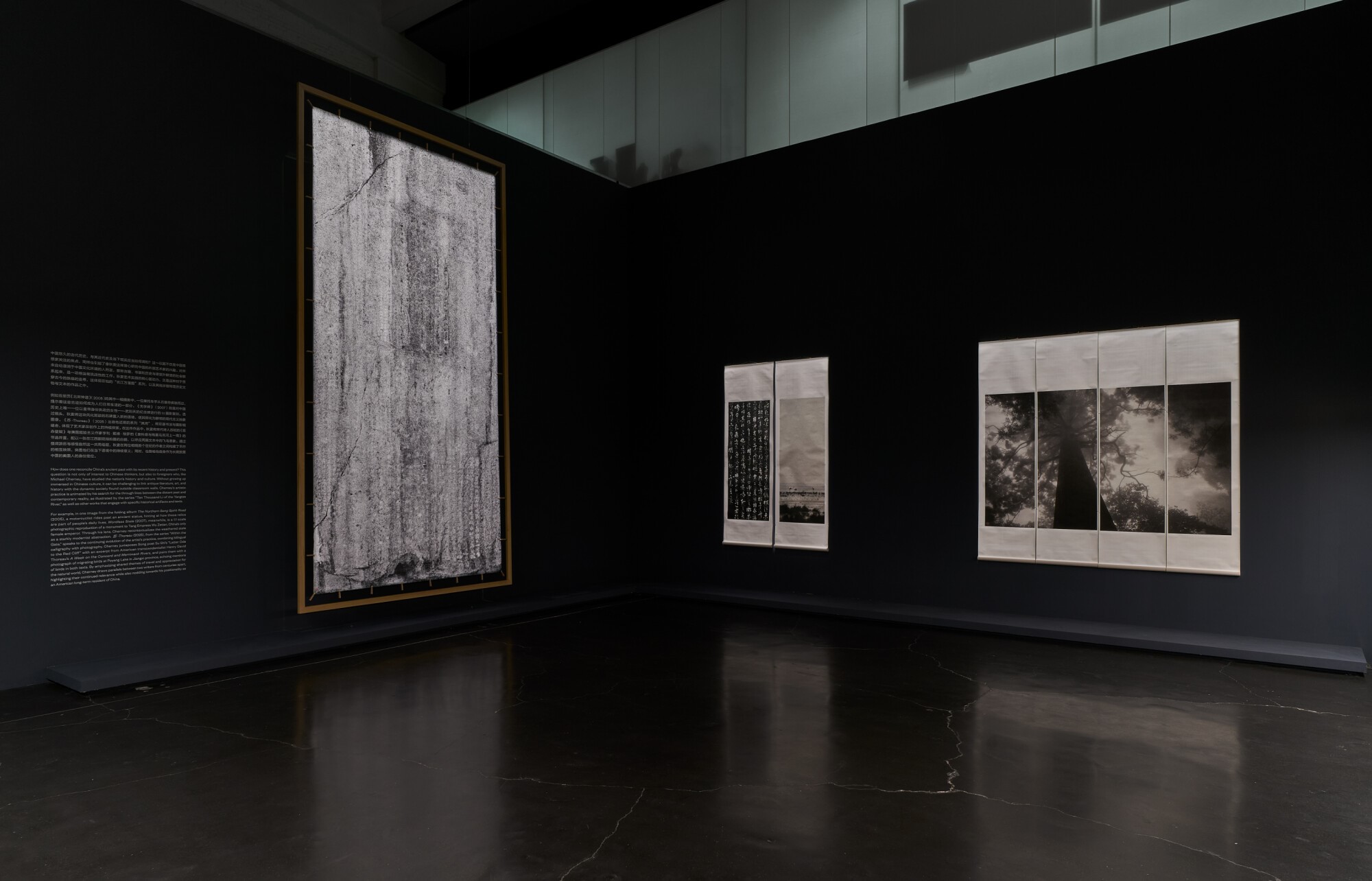
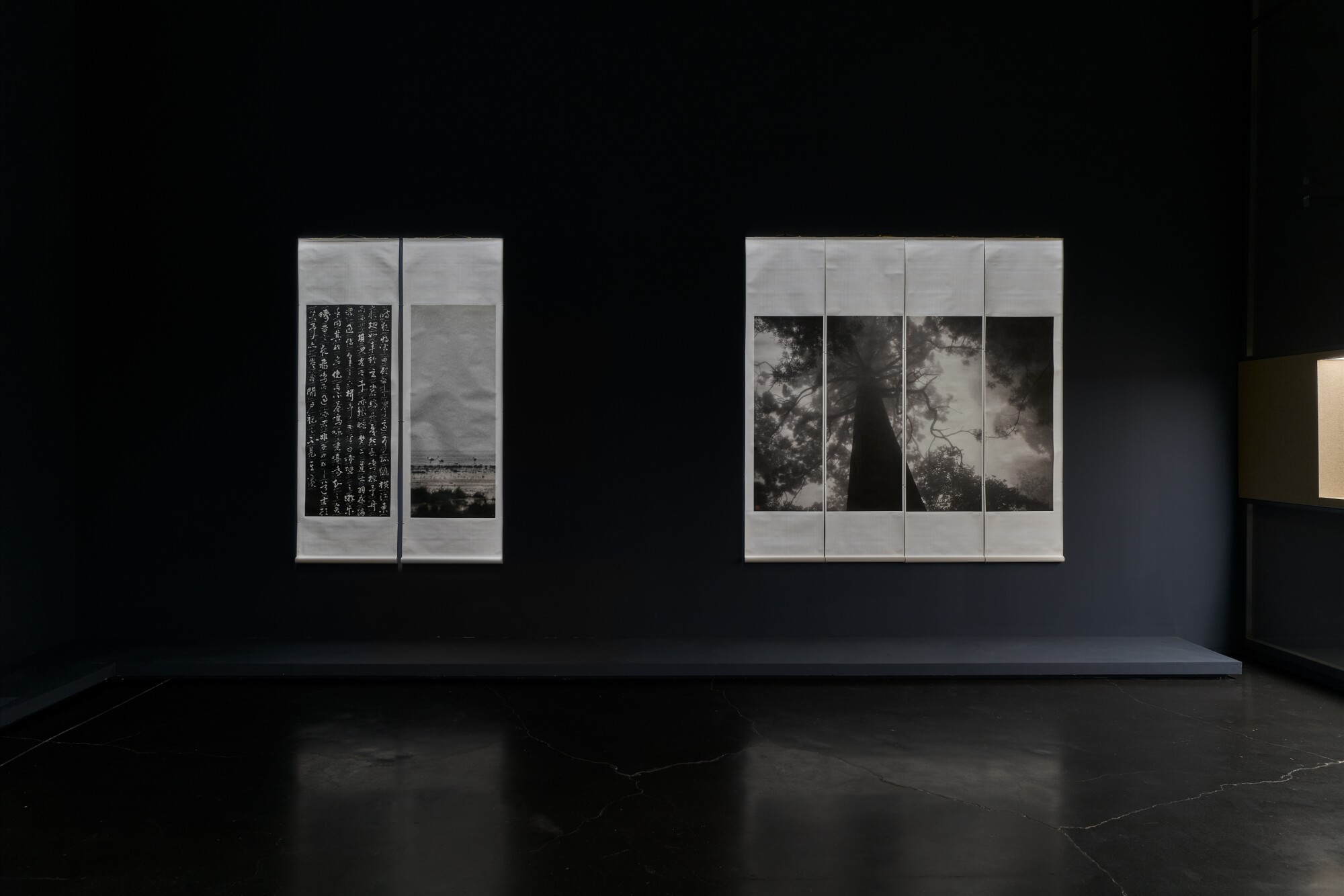
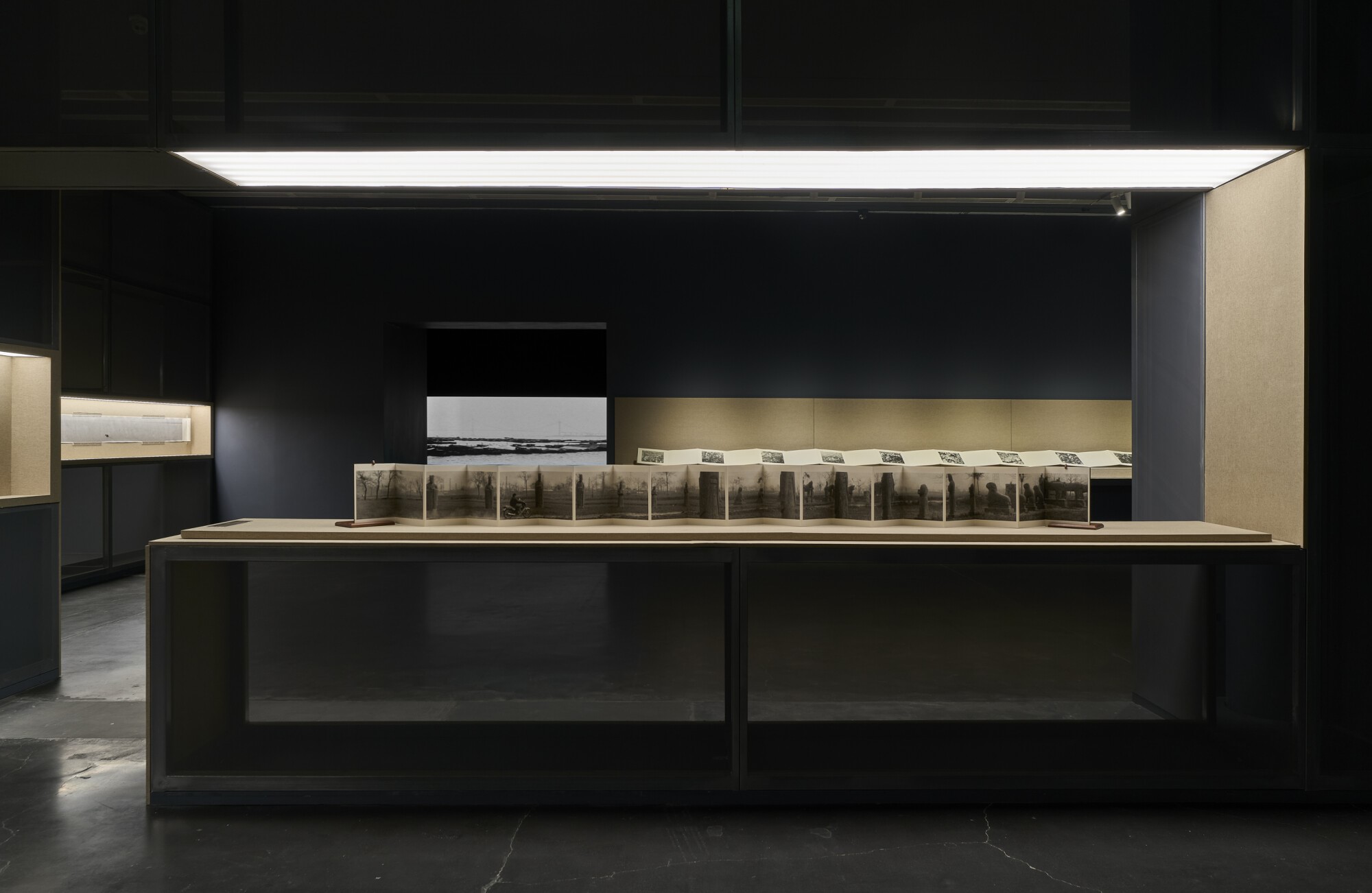
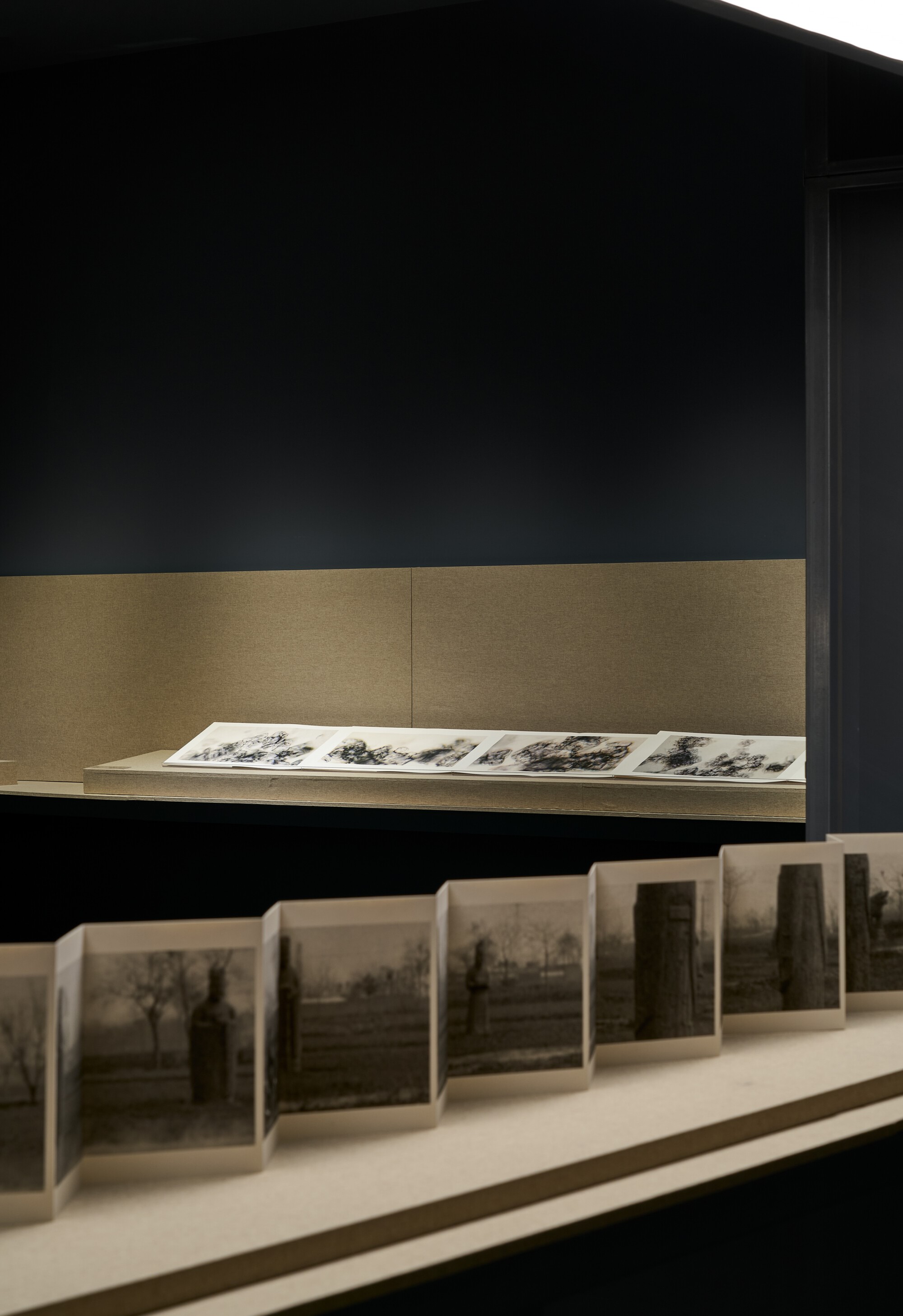
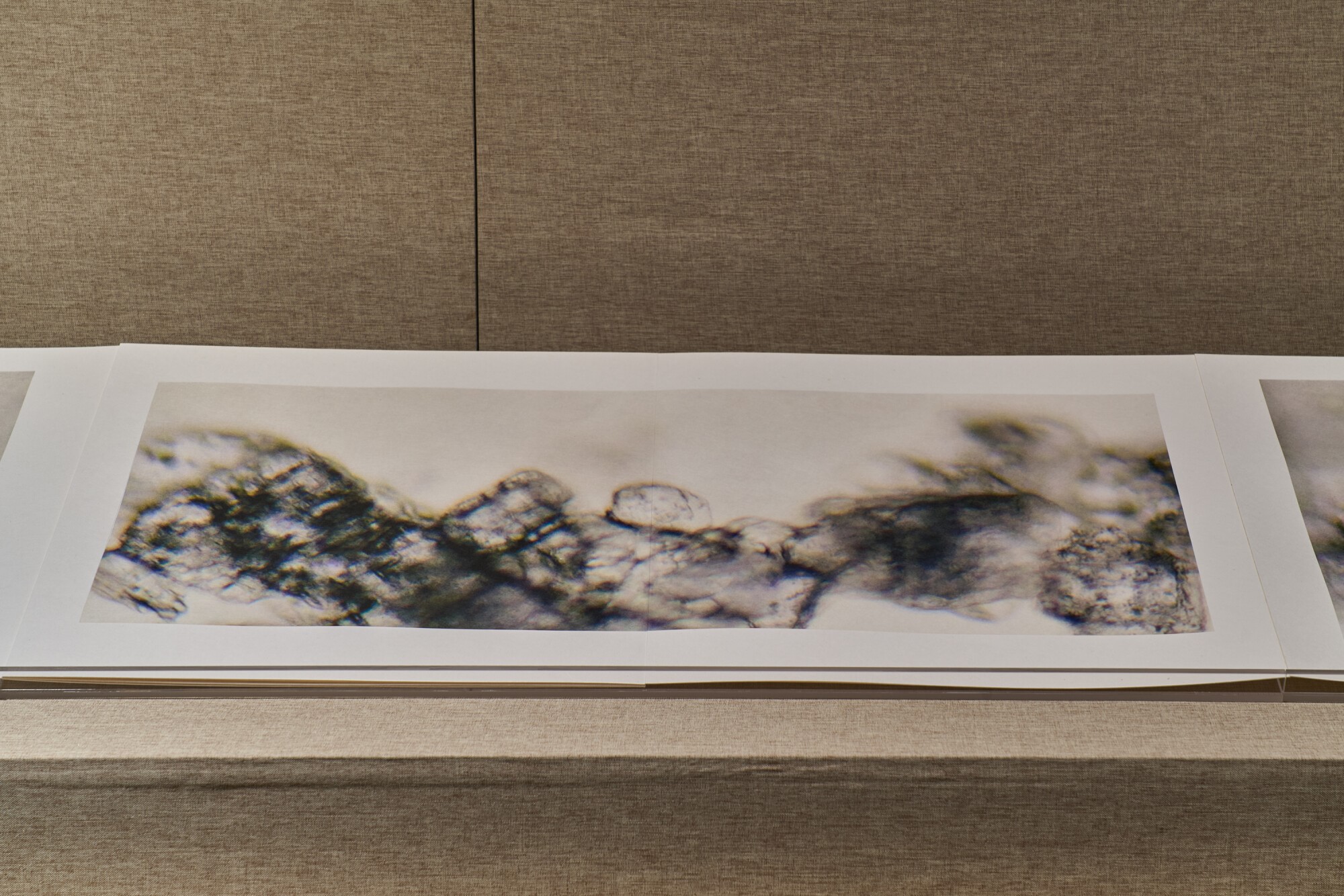
Beyond the “Ten Thousand Li of the Yangtze River” series, the exhibition also presents a number of works in which Cherney engages with sites and themes frequently cited in Chinese cultural history. In Wordless Stele (2007), the artist magnifies the grain of film to an extreme degree, reconstructing the surface of the monument associated with Empress Wu Zetian, the only woman in Chinese history to rule as emperor. At the scale of the original stele, the work evokes a return to the “wordless moment,” as the faint inscriptions left by the literati in later dynasties dissolve into the grain, producing a hazy echo with past history. The piece responds to the singular position of this historical figure, as photography becomes a medium of restoration, erasure, and silence. Other works such as Saltscape (2016), Shadow Curtains #8b (2010), and The Northern Song Spirit Road (2005) demonstrate Cherney’s sustained exploration of diverse subjects and modes of seeing, from salt crystals observed under a microscope, to ancient trees of Mount Lu shrouded in mist, to statues from a Northern Song sacred path standing amid farmland. New layers between real geography and imagined space unfold across these various images.
The exhibition also features Cherney’s most recent work juxtaposing calligraphy and photography, 苏–Thoreau (2025). The photographic component centers on images of birds at Poyang Lake in Jiangsu province, while the calligraphy, written by the artist himself, draws from two texts in Chinese and English that describe the experience of birdwatching on the shore. The Chinese excerpt comes from Su Shi’s Ode on the Red Cliff, and the English excerpt from Henry David Thoreau’s A Week on the Concord and Merrimack Rivers. Both passages depict the fleeting moment when birds rise from the water and sweep across the viewer’s sightline. In contrast to the dynamic scenes evoked in the texts, Cherney’s photographs capture the birds at rest, leaving viewers uncertain as to whether the moment occurred before or after the moment the birds took flight. In turn, the temporal disjunction effects an interplay between image and text. Through careful rearrangement and restructuring of classical texts, the artist interweaves the two languages in rhythm, sound, and meaning. The calligraphy transcends its role as a mere transcription of text, becoming instead a visual language between writing and painting.
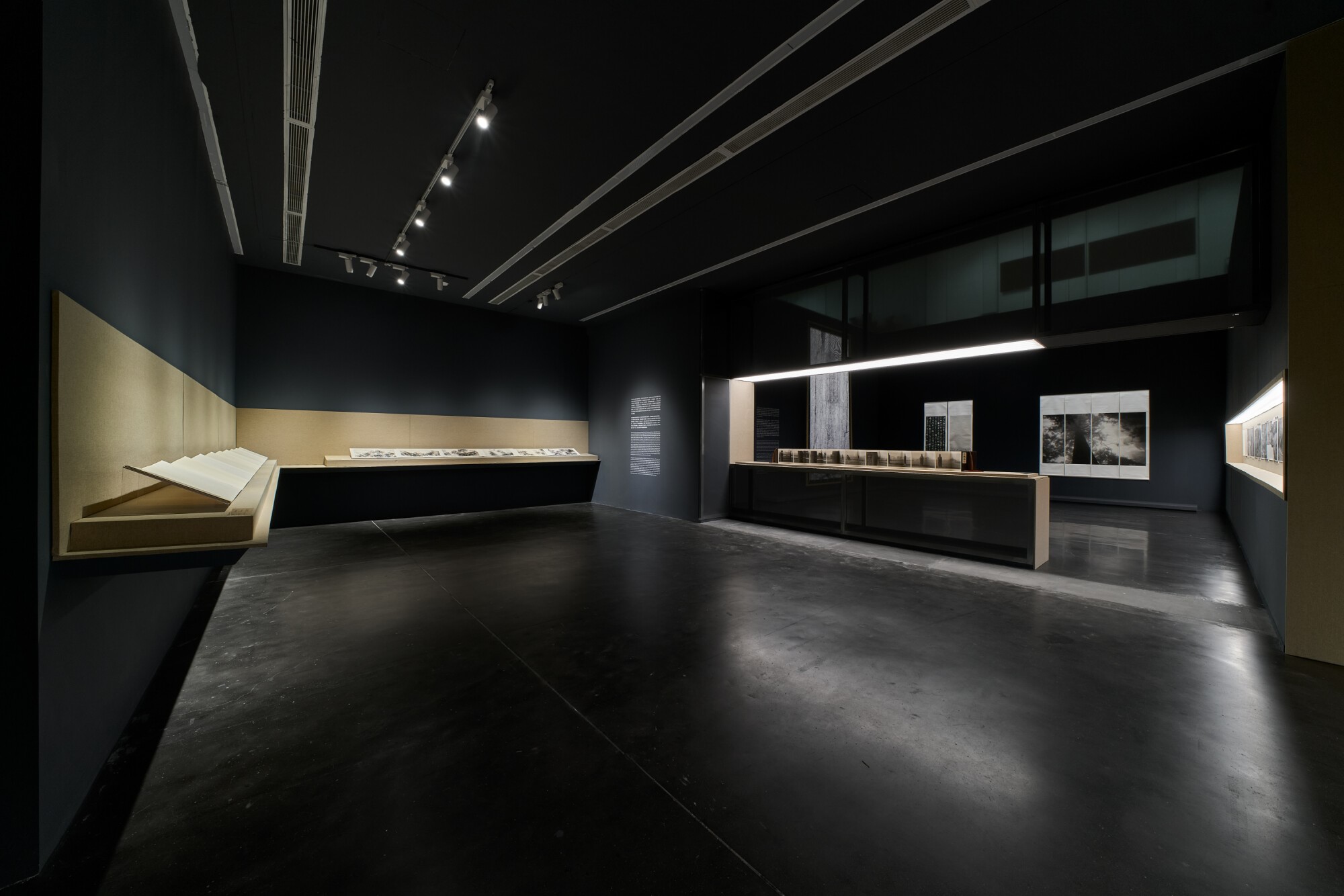
Translucent gray mesh is introduced as a primary element in the spatial design for this exhibition, allowing the works to unfold gradually in layers, appearing and disappearing in shifting degrees of visibility. The soft, permeable qualities of the mesh resonate with both the materiality of Cherney’s photographic practice and with paper and silk as materials commonly seen in traditional Chinese painting. The exhibition design draws inspiration from the principle of “changing views with each step” found in classical Chinese gardens. Through winding pathways and staggered walls, the space creates a rhythm of slow revelation and continuous unfolding, echoing on a spatial level the fluid vantage points that Cherney has developed in his works.
About the Artist
Michael Cherney (b. 1969, New York) received his undergraduate degree in Chinese language and history at the State University of New York at Binghamton and arrived in Beijing for graduate language study at Beijing Language and Culture University in 1991. More than three decades later, he continues to reside in Beijing and travels extensively across China. His major solo exhibitions include: "The Heart-Mind Learns From the Eyes" (Three Shadows Photography Art Center / +3 Gallery, Beijing, 2018); "Among Stone and Mist: Chinese Landscape Photography by Michael Cherney" (The Nelson-Atkins Museum of Art, Kansas City, 2014); "Reframing" (798 Photo Gallery, Beijing, 2006). He has taken part in numerous group exhibitions, including: "Nature's Pure Harmony" (Minsheng Museum of Modern Art, Beijing, 2025); "Go with the Flow: Reimaginations of the River" (Fotografiska Image Art Center, Shanghai, 2024); "The First Jinan International Biennale" (Shandong Art Museum, Jinan, 2020); "Beyond Ink" (China Art Museum, Shanghai, 2018); "Streams and Mountains without End: Landscape Traditions of China" (The Metropolitan Museum of Art, New York, 2018); "Landscape Duets: The Collaborative Works of Arnold Chang and Michael Cherney" (Cleveland Museum of Art, Cleveland, 2015); "The Art of the Chinese Album" (The Metropolitan Museum of Art, New York, 2014); "Journeys: Mapping the Earth and mind in Chinese art" (The Metropolitan Museum of Art, New York, 2007). His works have been included in the permanent collections of numerous institutions, including the Metropolitan Museum of Art, Art Institute of Chicago, Cleveland Museum of Art, Getty Research Institute, Harvard University Art Museums, Hong Kong University Museum and Art Gallery, Los Angeles County Museum of Art, Princeton University Art Museum, Yale University Art Gallery, among others. In addition, he has lectured at various institutions, including Northwestern University, the Seattle Art Museum, National Taiwan Normal University, the University of Toronto, UCCA Center for Contemporary Art, and the Central Academy of Fine Arts, among others.
Support and Sponsorship
Exclusive wall solutions support is provided by Dulux. UCCA also thanks the members of UCCA Foundation Council, International Circle, and Young Associates, as well as Lead Partner Aranya, Lead Art Book Partner DIOR, Lead Imaging Partner vivo, Presenting Partner Bloomberg, and Supporting Partners AIA, Barco, Dulux, Genelec, SKP Beijing, Stey, and Wanbo Media Group.
Public Programs
Public Programs for the exhibition “Michael Cherney: Middle Distance” include two opening events and one scholarly conversation. From the perspectives of art history and social history, the programs will explore Cherney’s artistic practice of revisiting classical Chinese painting traditions through photography, while engaging with the natural world, history, and geography.
The Opening Guided Tour will be led by the artist and the curator, leading audiences through several of Cherney’s key bodies of work: from close observation of micro-ecologies to expansive views of historical landscapes; from the intimate, album-like mode of close looking to the immersive, intimate mode of handscroll viewing. The tour will continue in the UCCA Alcove for the workshop “As it Unfolds,” which will focus on the visual textures and observational methods in Cherney’s handscroll works, inviting participants to engage with the materiality and temporality of his photography. During the exhibition period, the conversation, “Images Entering Landscape,” takes Cherney’s new work “苏-Thoreau” as its point of departure, considering how the artist engages philosophical ideas associated with Su Shi and Henry David Thoreau in his photographic practice. The discussion examines how Cherney revisits the tradition of Chinese literati landscape through low-resolution, high-grain imagery, and how a deliberate retreat from visual verisimilitude generates images with a distinct spiritual orientation.
UCCA Beijing
Open Today, 10:00-19:00 (Final entry: 18:30)
798, No. 4 Jiuxianqiao Lu, Beijing
Tel: +86 10 5780 0200
Fax: +86 10 5780 0200
UCCA Dune
Closed Today, 9:30-18:00
Aranya Gold Coast, Beidaihe
Tel: +86 335 7522 652
UCCA Clay
Open Today, 9:00-18:00 (Final entry: 17:30)
West Entrance, Creative & Cultural Ceramic Avenue, Dingshu Town, Yixing City, Wuxi City, Jiangsu Province
Tel: +86 0510 8767 9989