UCCA Beijing Open Today, 10:00-19:00 (Final entry: 18:30)
UCCA Dune Open Today, 9:30-18:00 (Final entry: 17:30)
UCCA Clay Closed Today,
UCCA Dune
Katie Paterson: Across Deep Time
2026.10.25 - 2027.4.11
About
From October 25, 2026, to April 11, 2027, UCCA Dune presents “Katie Paterson: Across Deep Time,” the artist’s first institutional exhibition in China. With deep time as its guiding thread, the exhibition brings together works created over nearly two decades that explore nature, time, and the cosmos, alongside three new commissions by UCCA. Working with tangible materials such as fossils, tree ash, sand, water, light, and scent, Paterson evokes vast geological epochs, distant celestial bodies, and invisible natural cycles, inviting visitors on a voyage through space and time shaped by scientific imagination and Romanticism.
From October 25, 2026, to April 11, 2027, UCCA Dune presents “Katie Paterson: Across Deep Time,” the first institutional solo exhibition in China by the Scottish artist (b.1981, Scotland). Bringing together 21 works created over nearly two decades that explore nature, time, and the cosmos, the exhibition includes several of Paterson’s signature works, three new works commissioned by UCCA for the exhibition, and two of her other most recent works. “Deep time” refers to geological time spanning billions of years, far beyond the scope of everyday human experience. It expands the historical frame beyond the relatively brief span of human civilization to encompass the formation of the Earth, the evolution of life, and the much longer history of the cosmos. With deep time as an underlying thread, the exhibition invites visitors on a voyage between Earth and the cosmos: beginning with the long histories of forests, deserts, oceans, and the evolution of life, it moves outward to the Moon and the planets of our solar system, before extending into the depths of space. “Katie Paterson: Across Deep Time” is curated by UCCA Assistant Curator Zhang Yao.
Rooted in rigorous research, Katie Paterson’s interdisciplinary artistic practice nevertheless retains a distinct Romantic sensibility. Knowledge and data drawn from astronomy, geology, and ecology are transformed into the materials and structures of her works, yet are rarely presented as information alone. Rather than relying on grand visual spectacles to convey the vastness of the cosmos and the natural world, Paterson distills complex and extensive research into forms of remarkable simplicity and restraint. A beam of light, a stretch of sound, a scent, or an apparently ordinary object can each open onto temporal and spatial dimensions that far exceed the span of an individual life.
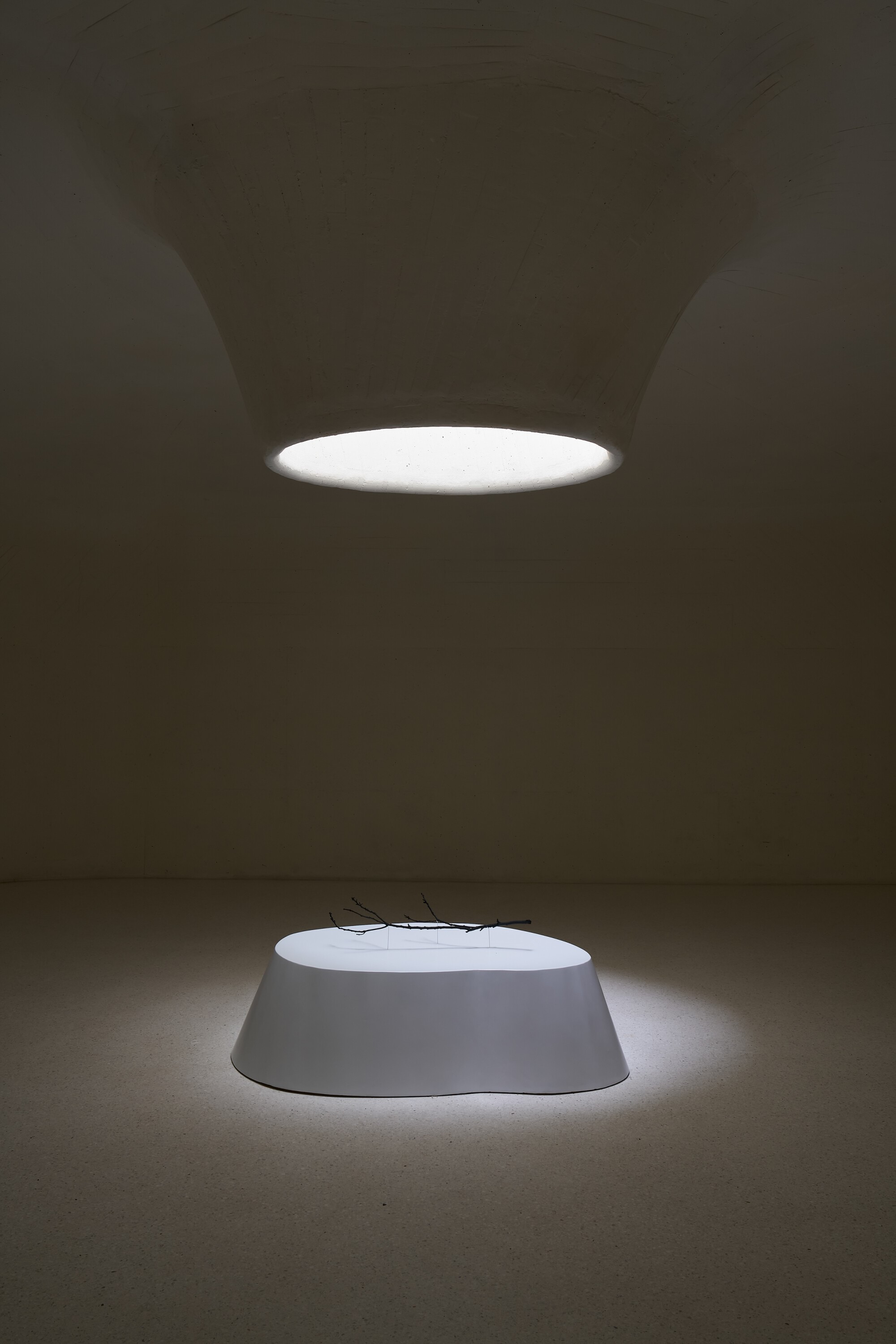
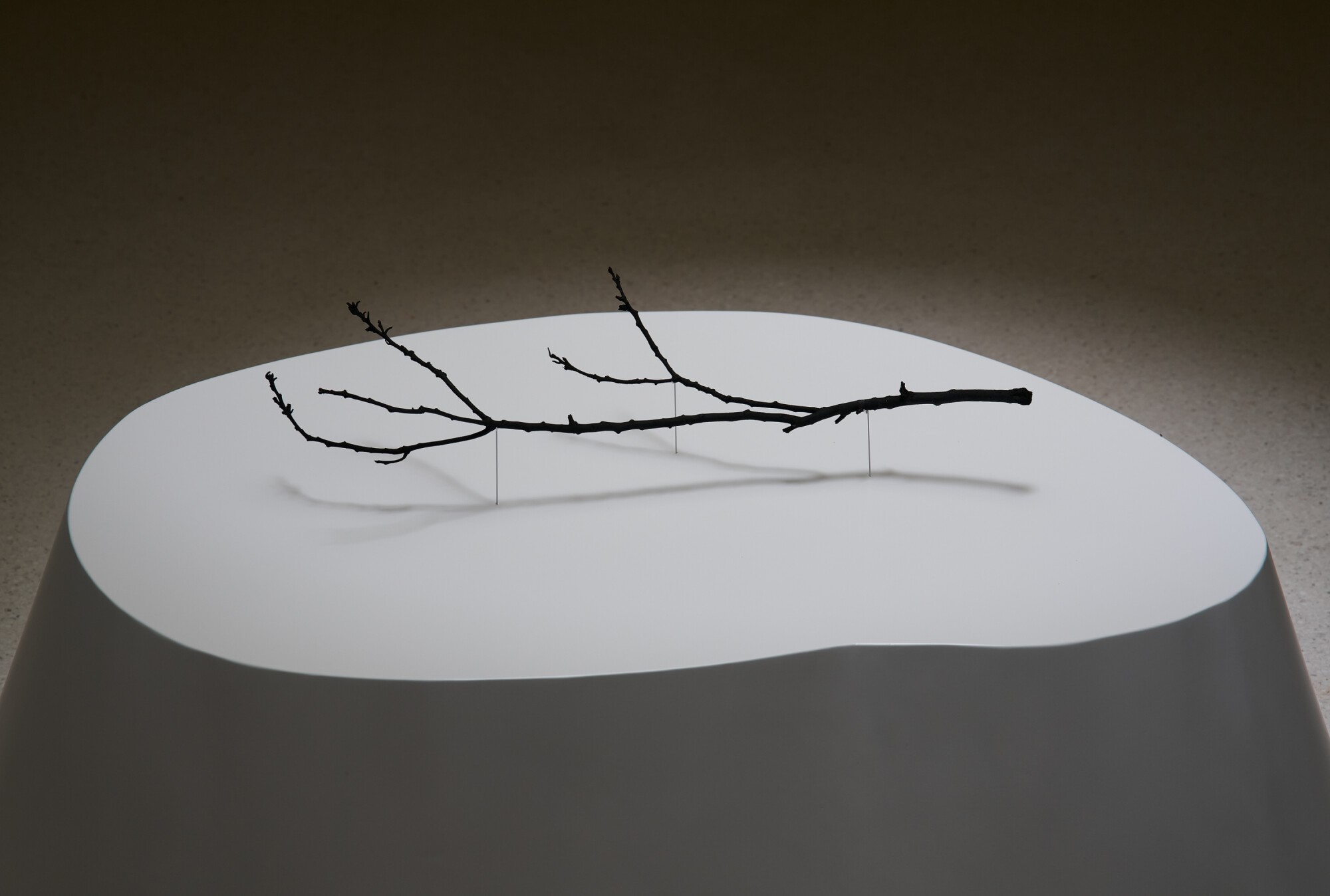
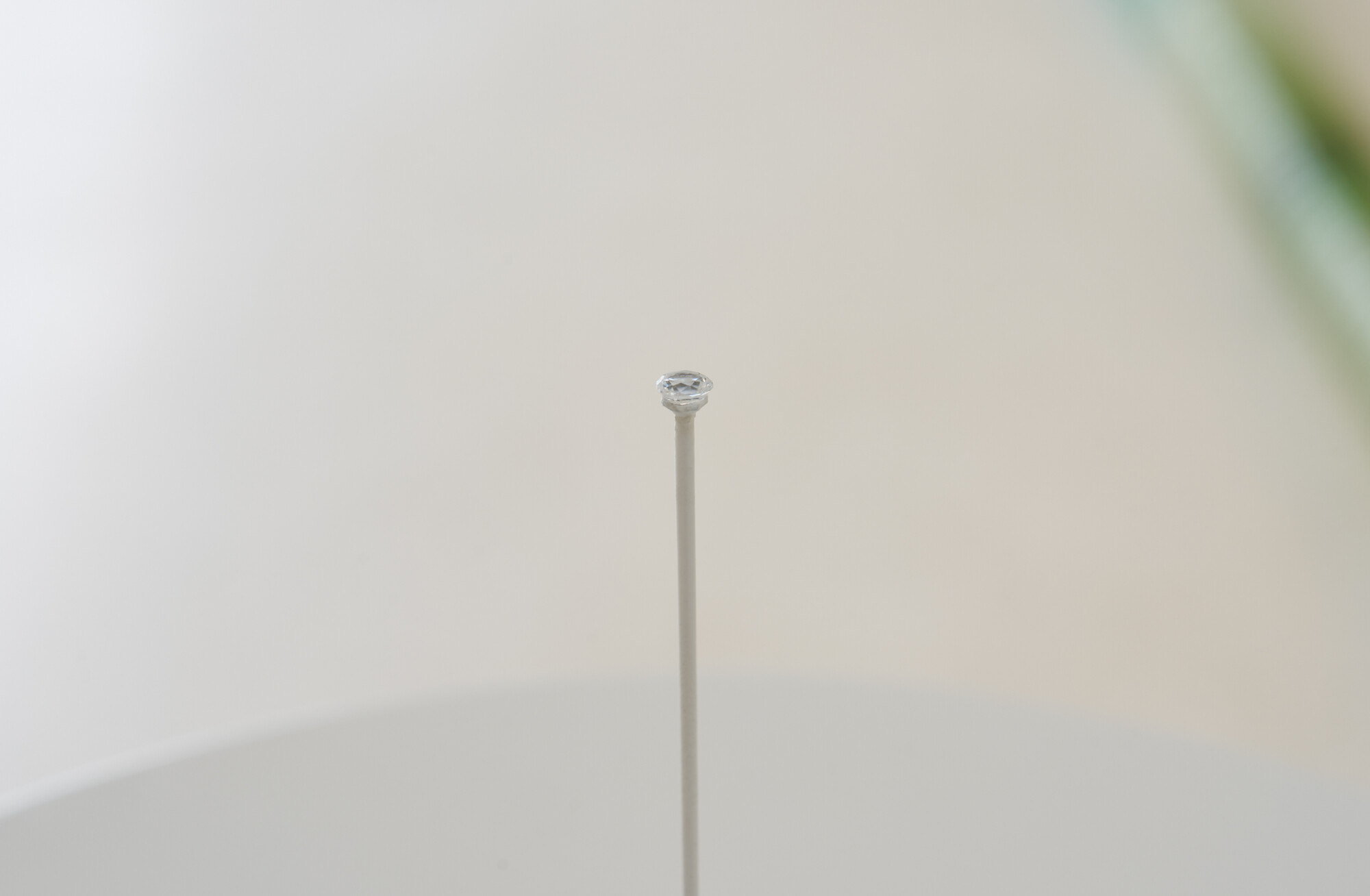
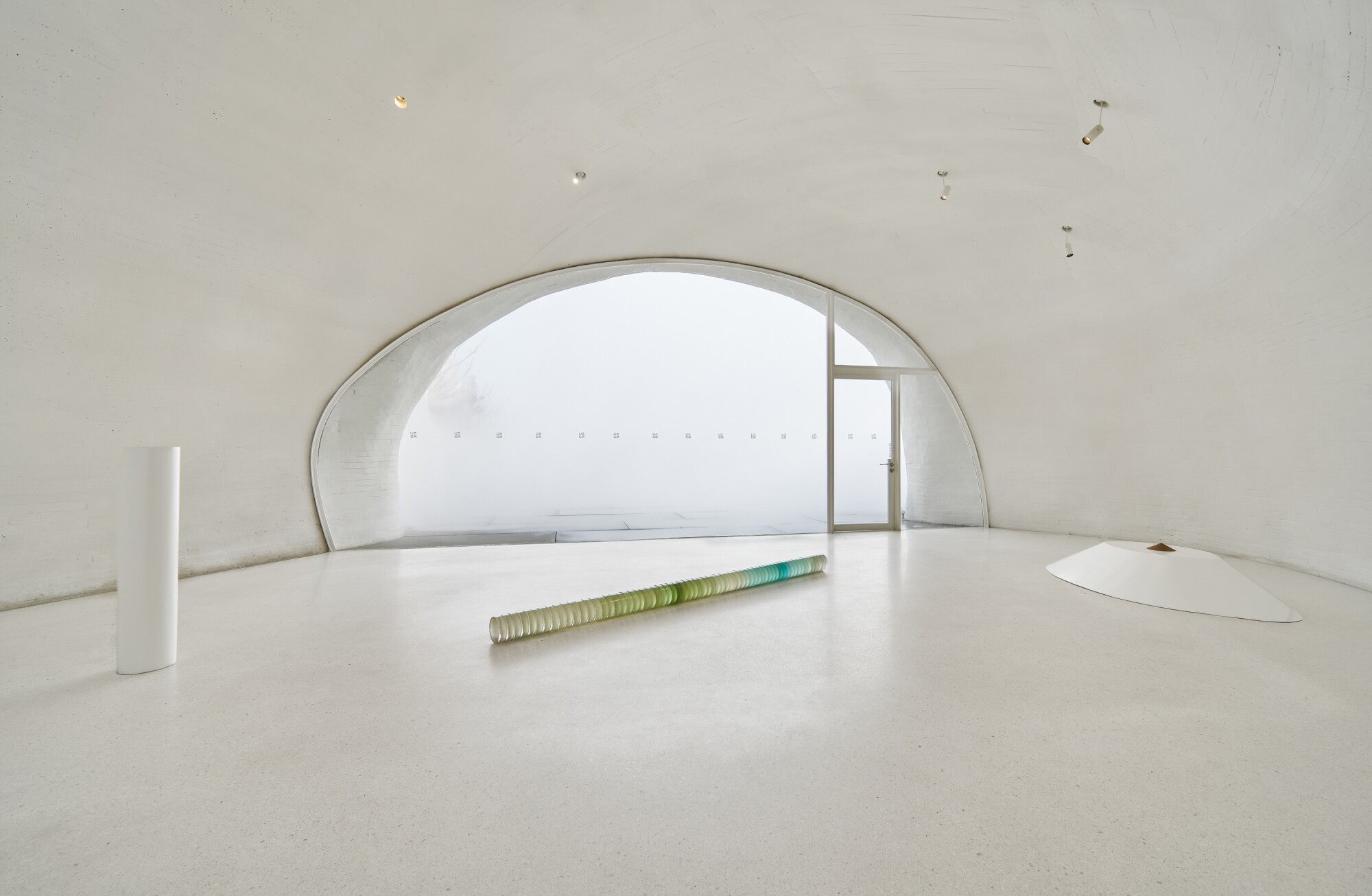
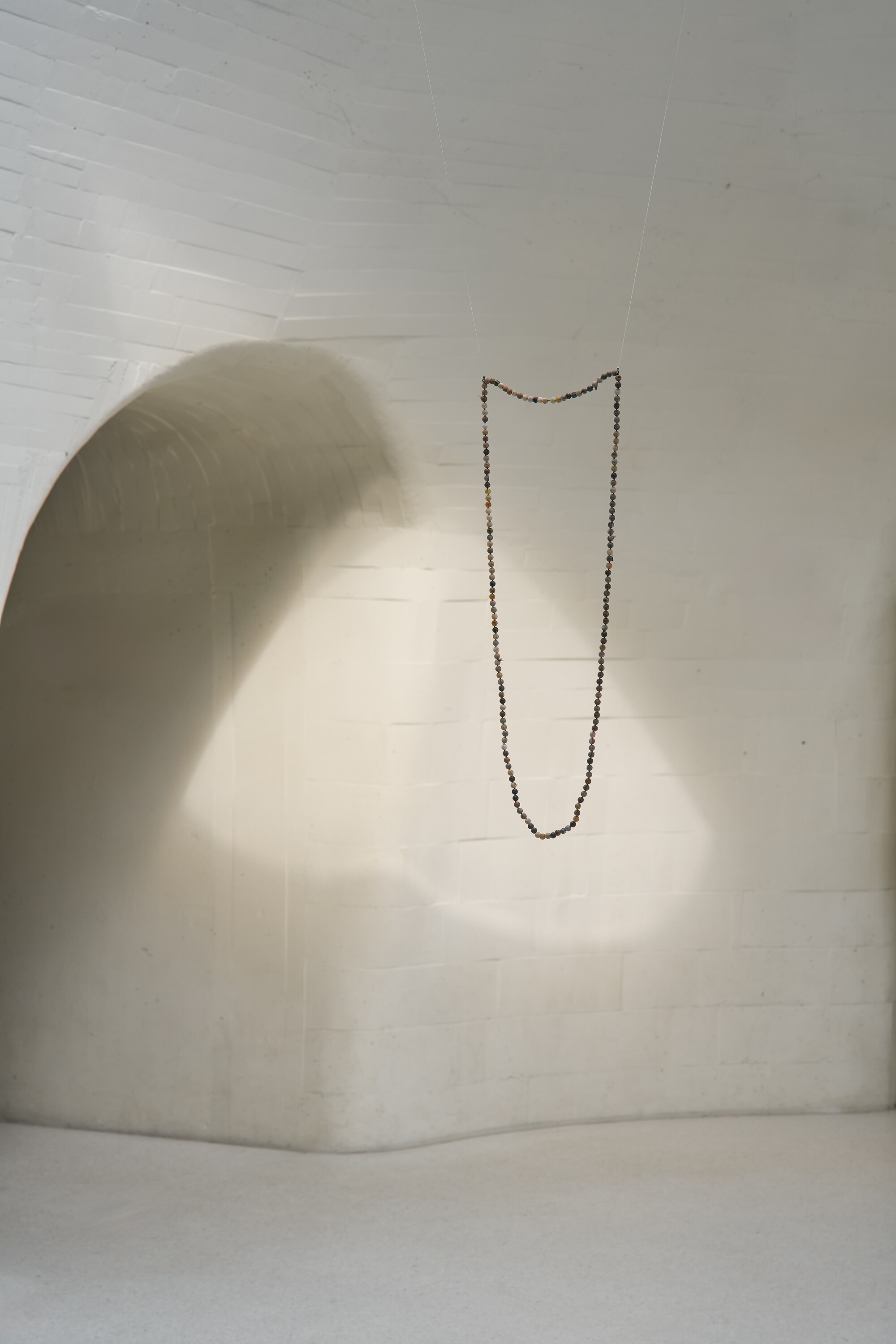
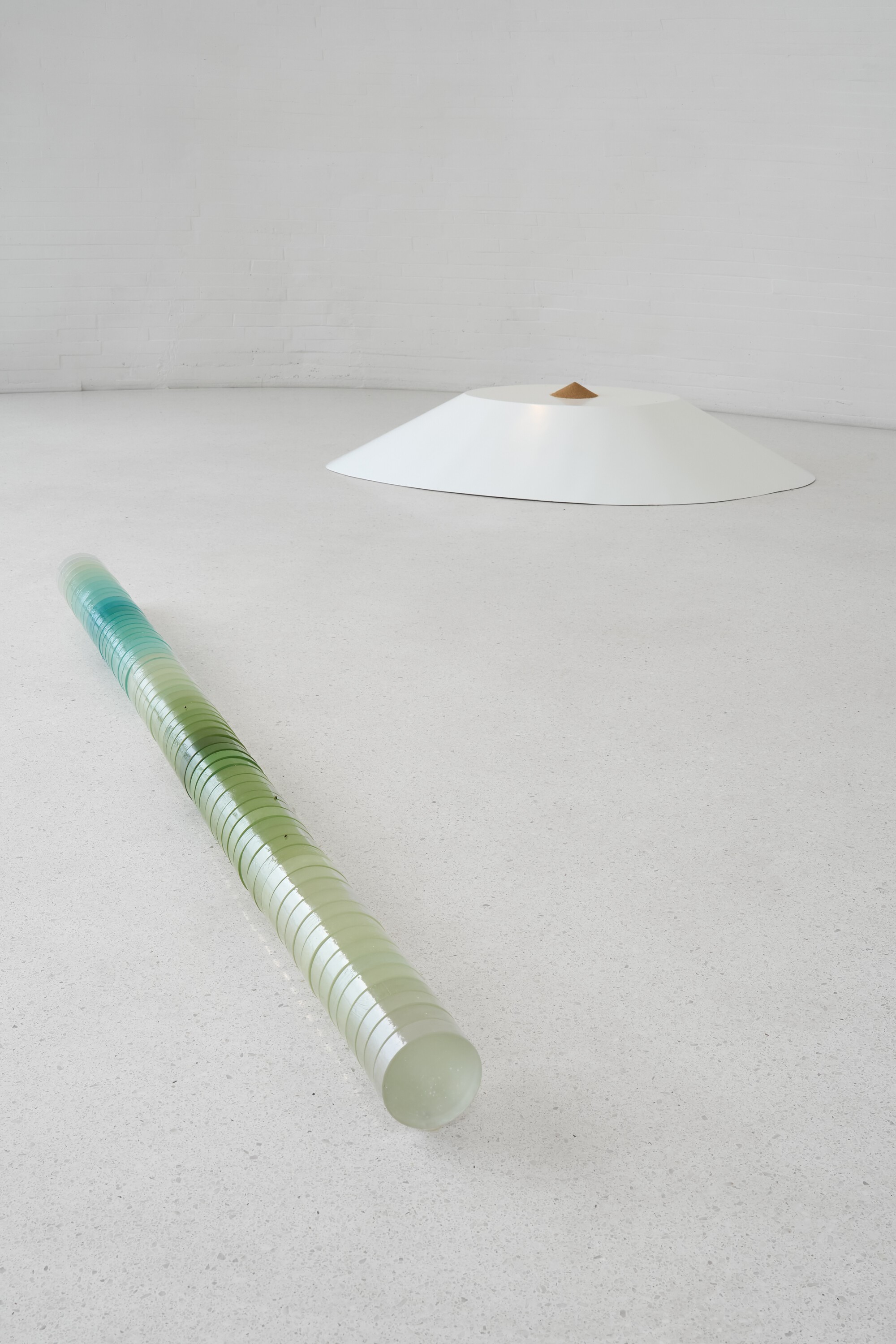
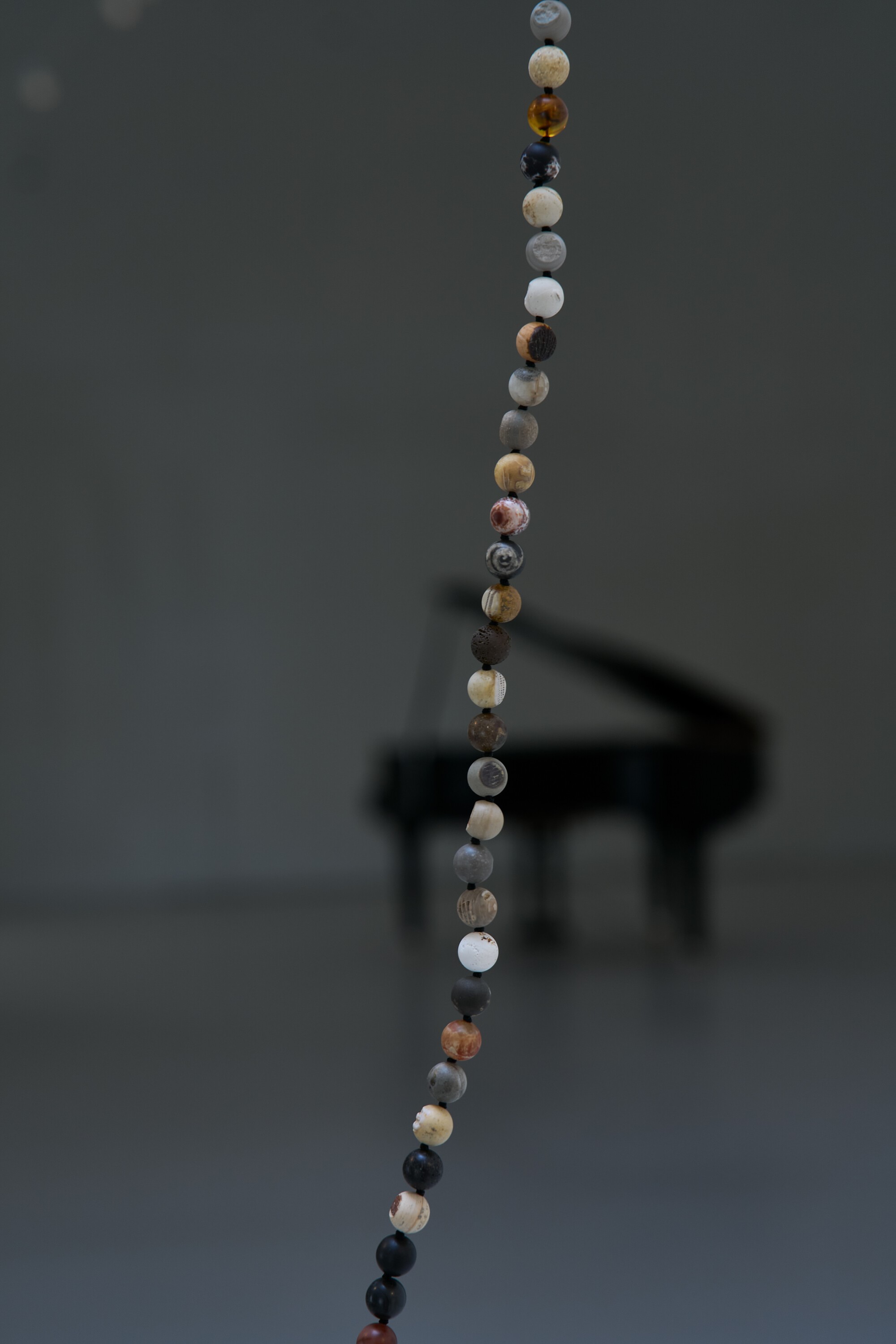
The exhibition opens with Silva (2024), a slender branch made from the ashes of 10,000 tree species worldwide. Ancient woodlands, tropical rainforests, boreal forests, and fragile ecosystems lose their geographical distinctions, converging in a single, delicate form. In Galleries 2 and 2+, Paterson continues her exploration of Earth’s deep history. Fossil Necklace (2013) comprises 170 spherical fossil beads, each marking a pivotal moment in the evolution of life, from single-celled organisms and continental drift to mass extinctions and the emergence of the first flower. The vast arc of evolution is condensed into a single necklace. And the Moon and the Stars and the World (2026), a new work, brings together materials spanning cosmic, geological, and biological history. For more than a decade, Paterson has collected these materials through her artistic practice, collaborations with scientists, and fieldwork around the world. Carbon extracted from these materials has been subjected to intense heat and pressure to grow a single white diamond, compressing billions of years of history into a tiny jewel. In Circe (2024), sand collected from deserts around the world is cast into glass discs that transition from transparent to blue-green, transforming loose, dry grains into a material of fluid, translucent beauty.
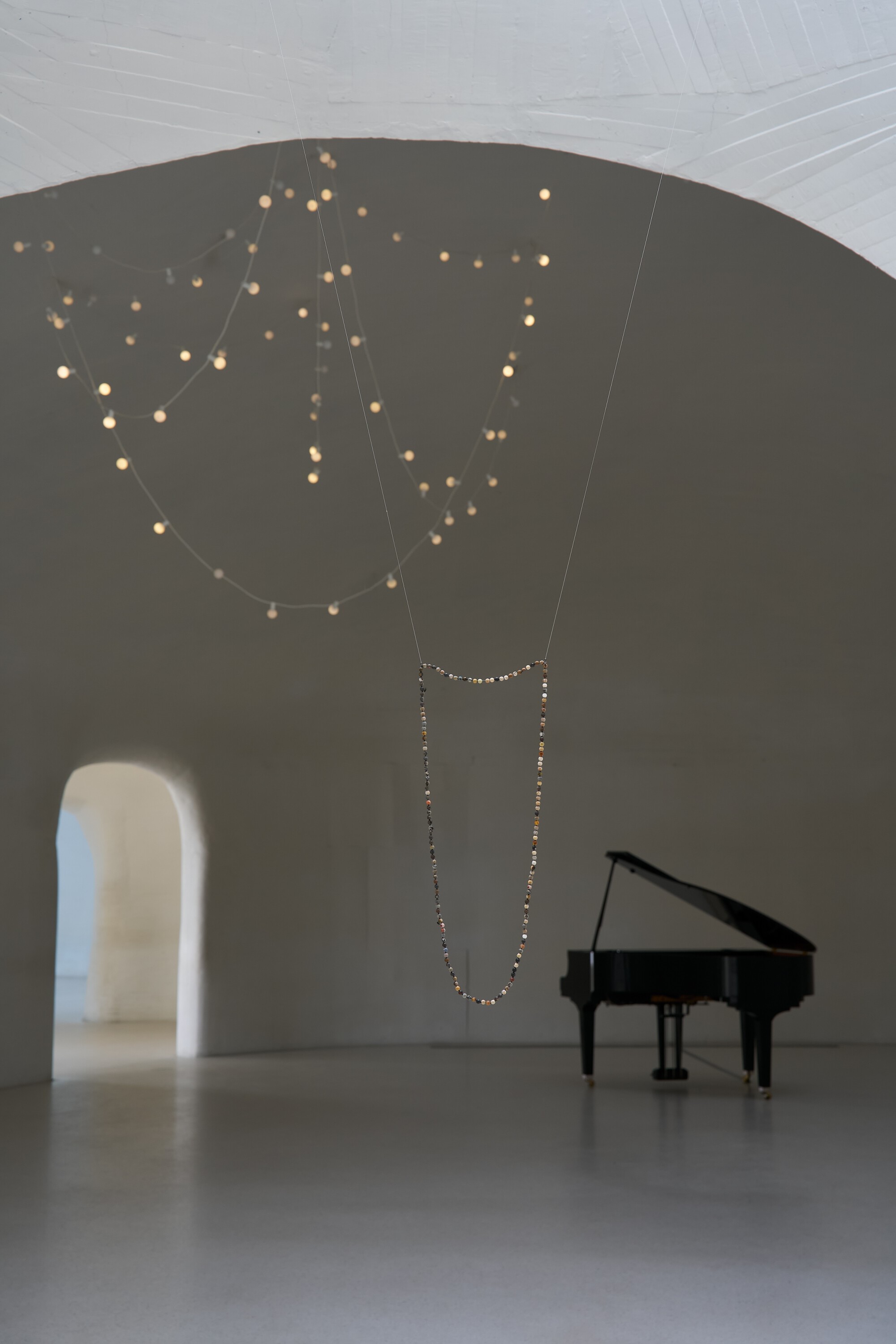
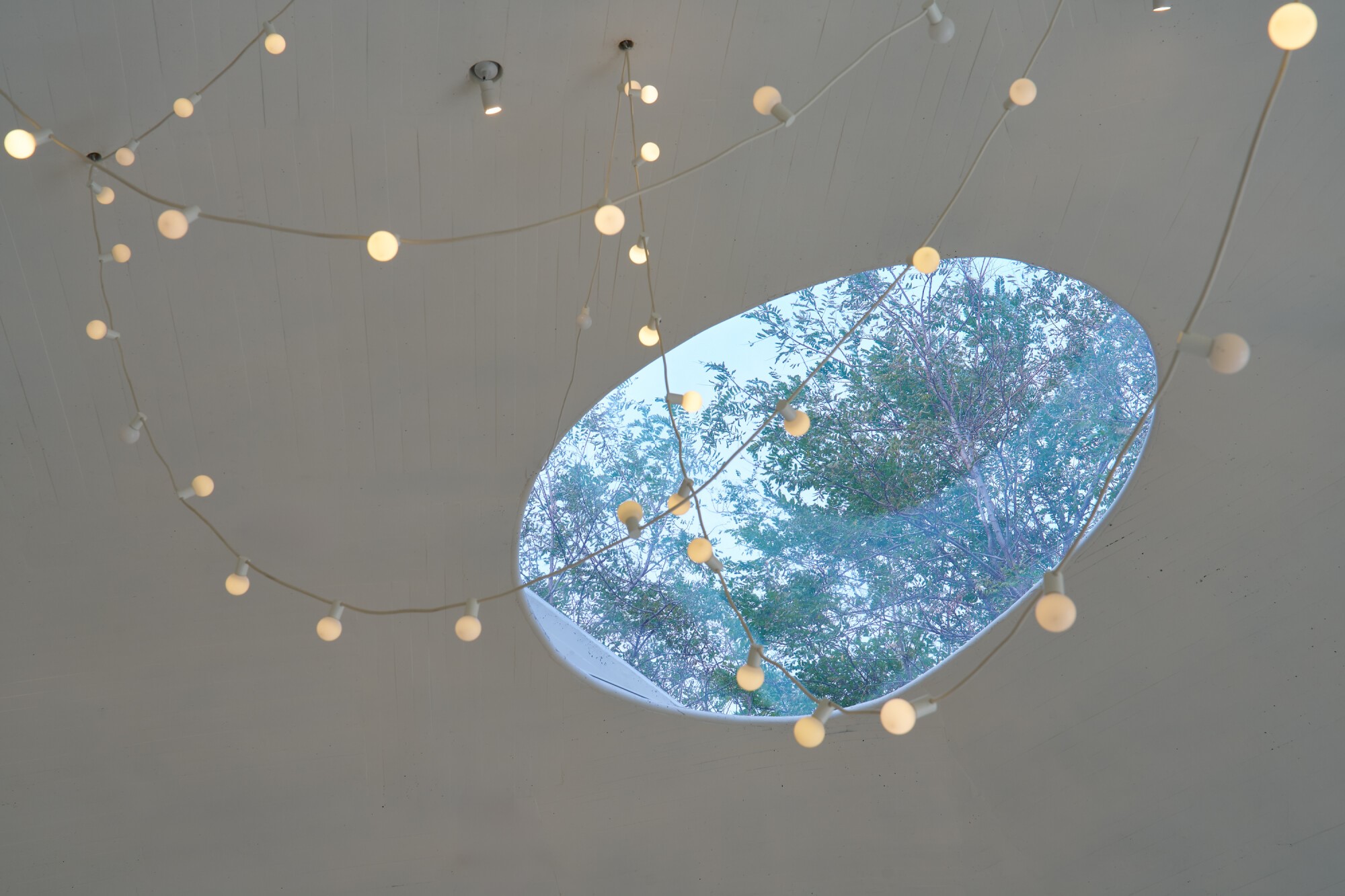
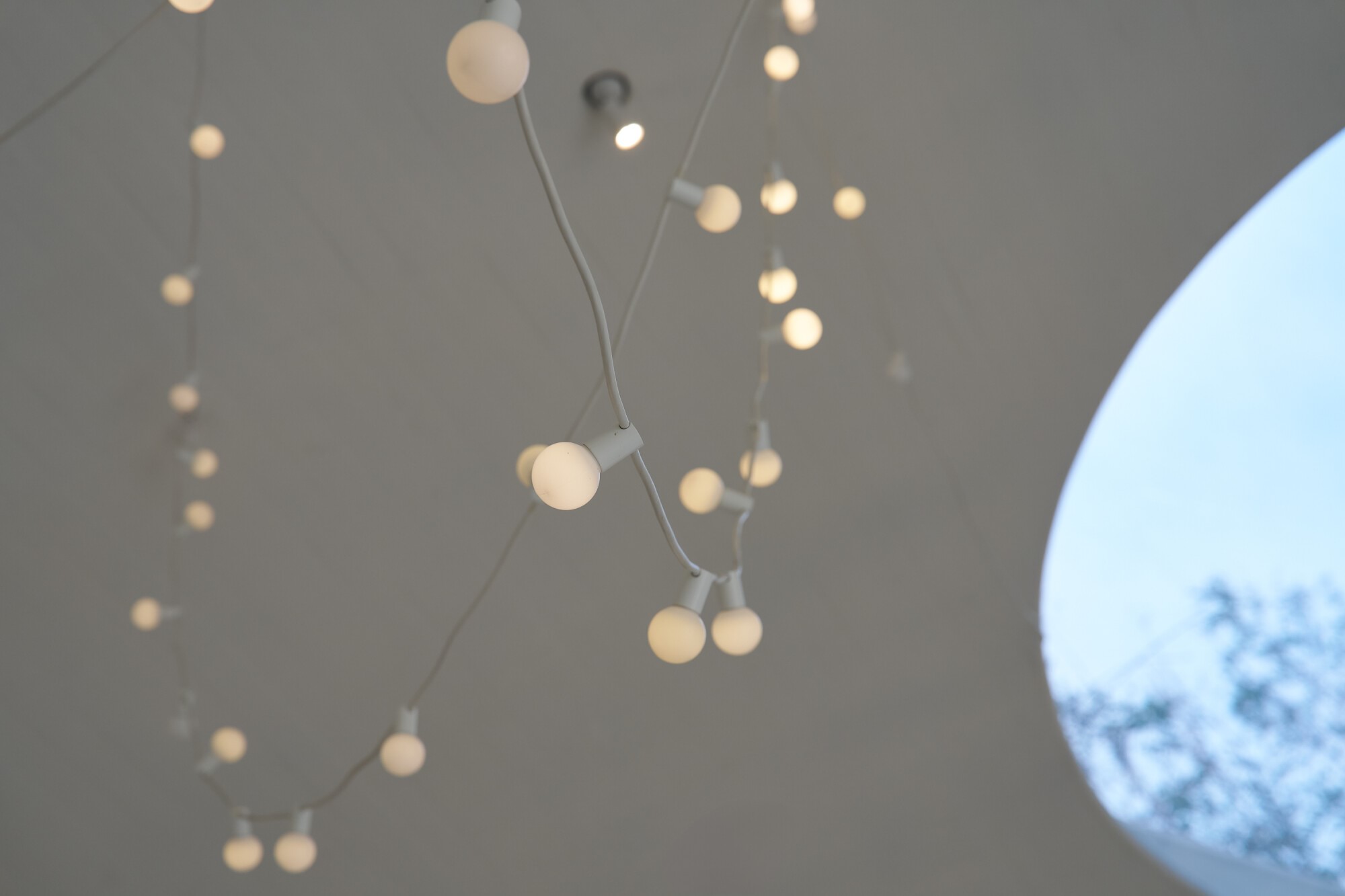
From Gallery 3, the exhibition gradually shifts the gaze from Earth’s surface toward the Moon, the stars, and the deeper reaches of the cosmos. In Earth-Moon-Earth (Moonlight Sonata Reflected from the Surface of the Moon) (2007), Beethoven’s Moonlight Sonata is translated into Morse code and transmitted to the Moon, then translated back into musical notation after the signal returns, partially lost, following reflection from the lunar surface. Phoenix (2016) consists of 92 festoon lights stretching across the gallery, each calibrated to the relative brightness of one of the 92 stars in the constellation Phoenix. The variations in brightness of a distant star field are brought into the gallery, forming a star map that visitors can view at close range. The 〇 series (2023–2025) uses pigments made from materials including fossils of the earliest cellular life, tree ash, desert sand, sea salt, and dust that predates the formation of the solar system. Arranged in similar circular compositions, these materials bring together matter from different periods and environments. Each circle serves as a symbolic pinhole, offering a glimpse into landscapes lost through the passage of time. Night (2026) takes the form of a slender vertical light tube that brings together the colors of approximately 10,000 stars visible to the naked eye from the Northern and Southern Hemispheres.
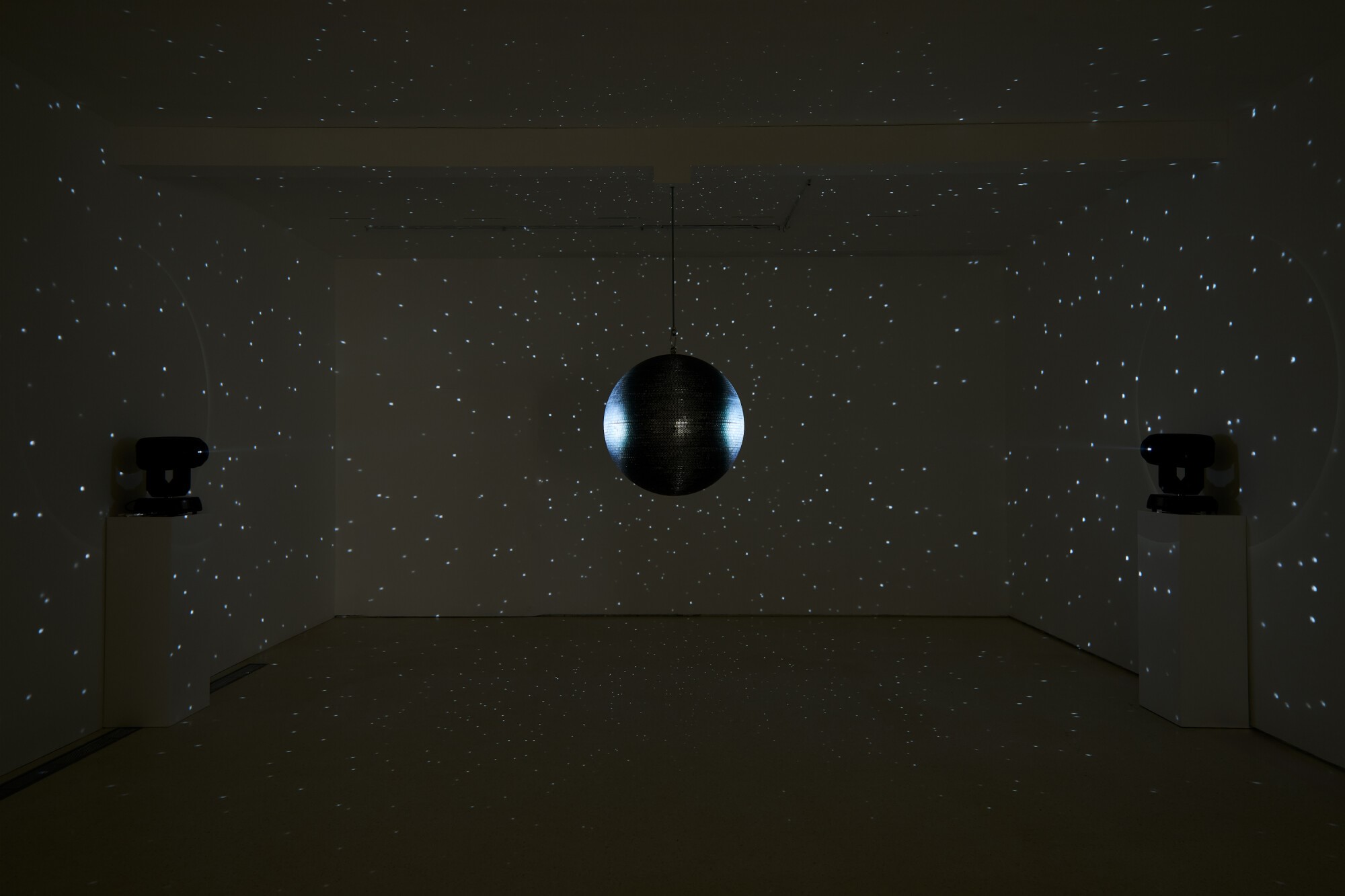
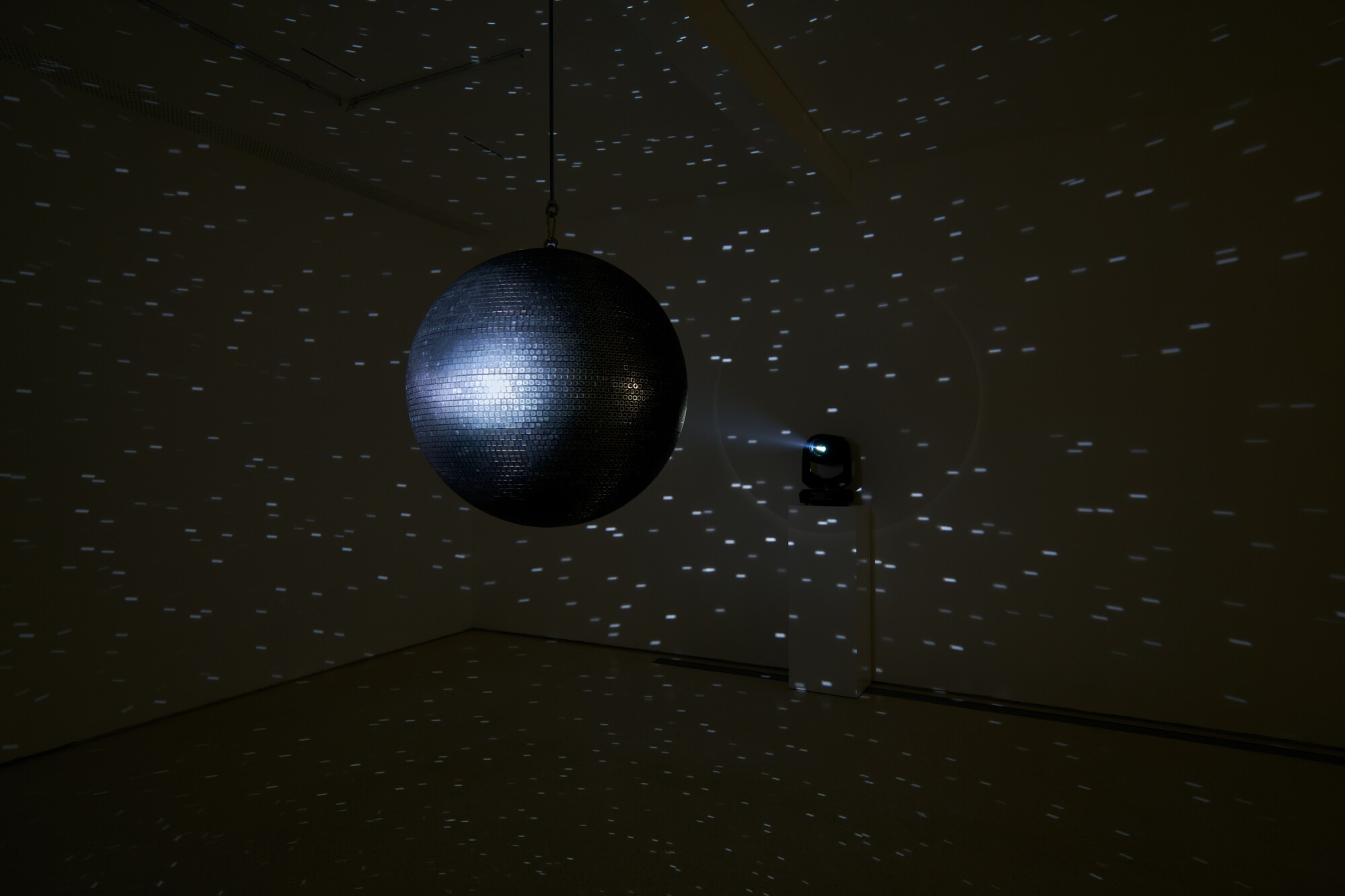
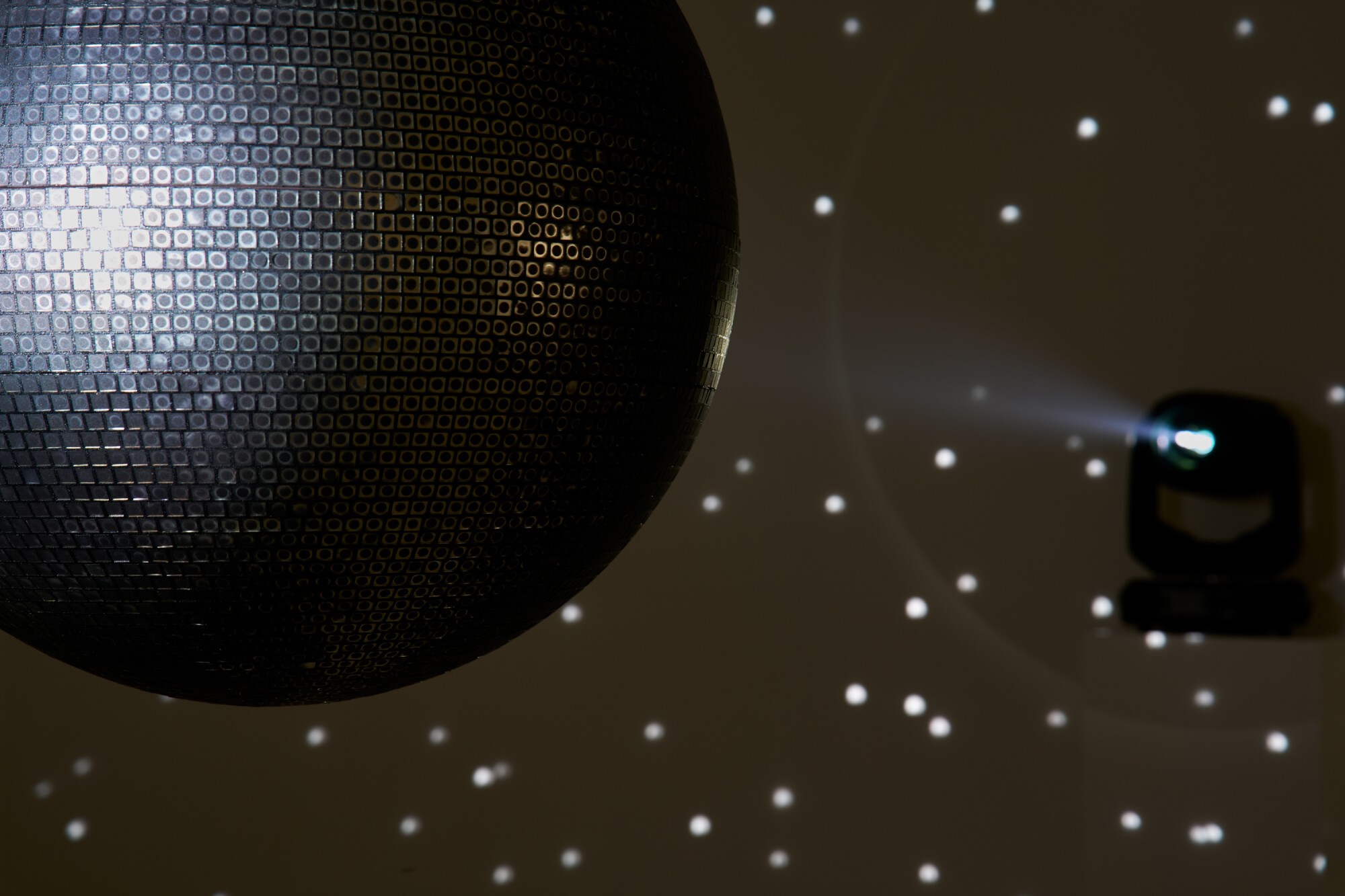
In Gallery 4, celestial motion and time itself become the focus. Totality (2016) brings together more than 10,000 images of solar eclipses recorded over centuries, concentrated onto a mirrored sphere. Moments of darkness and renewed light, separated by different eras, reappear together in a single space. Timepieces (Solar System) (2014) comprises nine clocks displaying the local time on each of the eight planets and the Moon. A day on Earth lasts 24 hours, on Mars 24 hours and 40 minutes, while a single day-night cycle on Mercury lasts thousands of hours. Running side by side, the clocks unsettle the familiar 24-hour day as a universal measure, revealing it as brief and contingent within the vast scale of the cosmos.
Scent, light, and fleeting gestures take center stage in Gallery 5, offering alternative ways of exploring the universe. Candle (from Earth Into a Black Hole) (2015) releases a succession of scents corresponding to Earth, the Moon, the Sun, Mars, Jupiter, and interstellar space. As the candle slowly burns down, a journey from Earth to a black hole unfolds as a 12-hour olfactory experience. 100 Billion Suns (2011) recreates gamma-ray bursts, the brightest explosions in the Universe, which can shine more than 100 billion times brighter than our Sun. Using specially designed confetti cannons, each containing 3,216 pieces of paper color-coded to correspond to every gamma-ray burst recorded at the time the work was made, Paterson brings these vast cosmic explosions into the gallery in fleeting bursts of color. Commissioned by UCCA for the exhibition, Twilight (2026) transforms the gallery’s windows overlooking the Beidaihe coast with a translucent film that recreates the colors of a Martian sunset. Sunlight passing through the windows casts the space in a cool blue hue, briefly lending it the light of another planet.
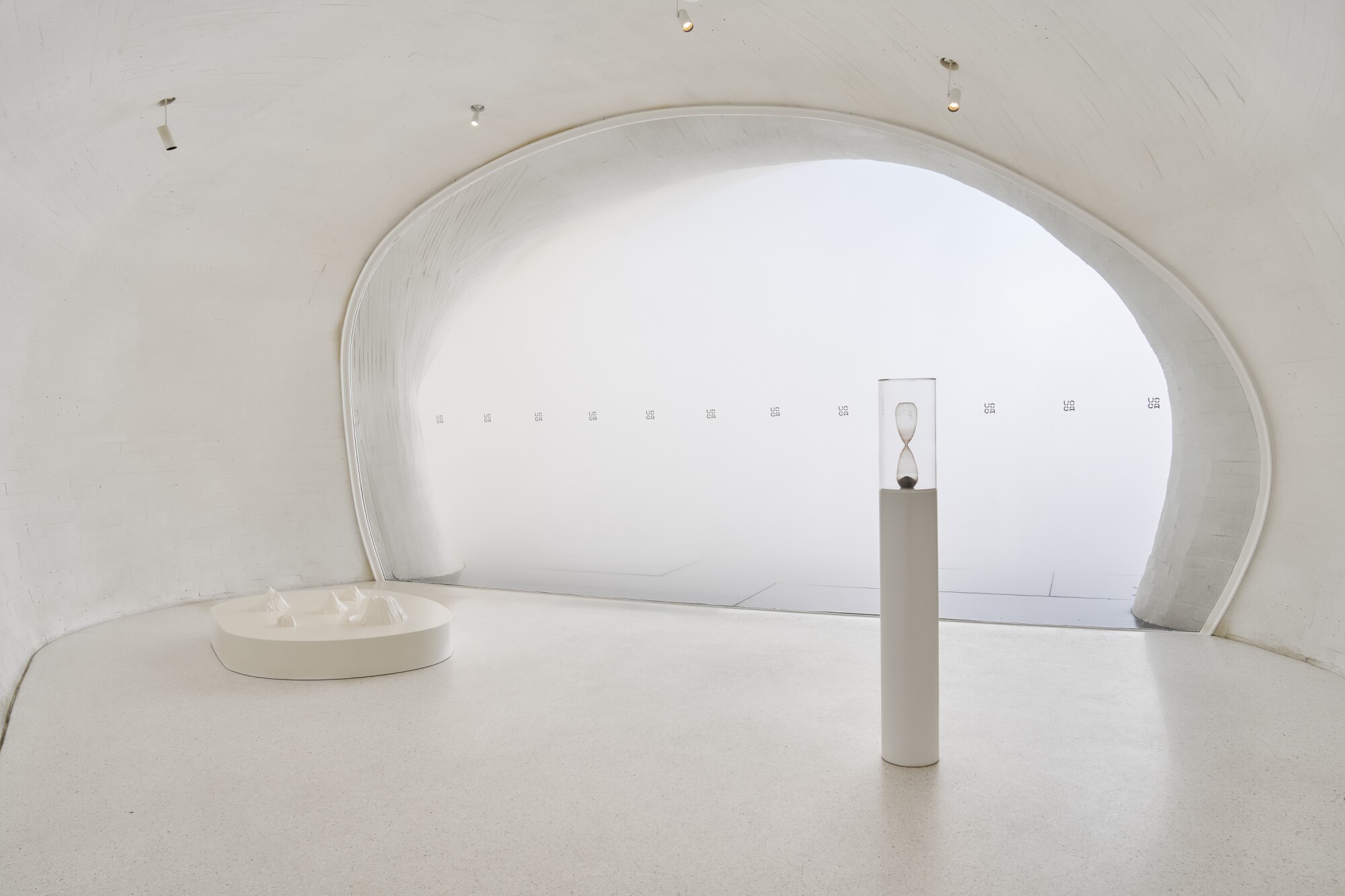
Gallery 6 presents To Burn, Forest, Fire (2021), an incense work developed through Paterson’s research with scientists into the earliest forests on Earth and forests threatened with extinction by the climate crisis. Two incense blends were specially created to evoke the scents of these forests, separated by hundreds of millions of years. Through the burning of incense and the act of breathing, two forests that never existed at the same time are brought together in a fleeting moment. In Gallery 7, The Moment (2022), a 15-minute sand timer, encases ancient matter predating the formation of the Sun, along with debris from stellar explosions, asteroid fragments, lunar meteorites, and Martian dust. The brief span of its countdown stands in striking contrast to the vast cosmic history held within. First There Is a Mountain (2019/2026) invites visitors to sculpt sand mountains using molds modeled on five mountain peaks. No longer merely imposing landscapes to be gazed upon from afar, mountains can be held lightly in the palm of the hand and reshaped.
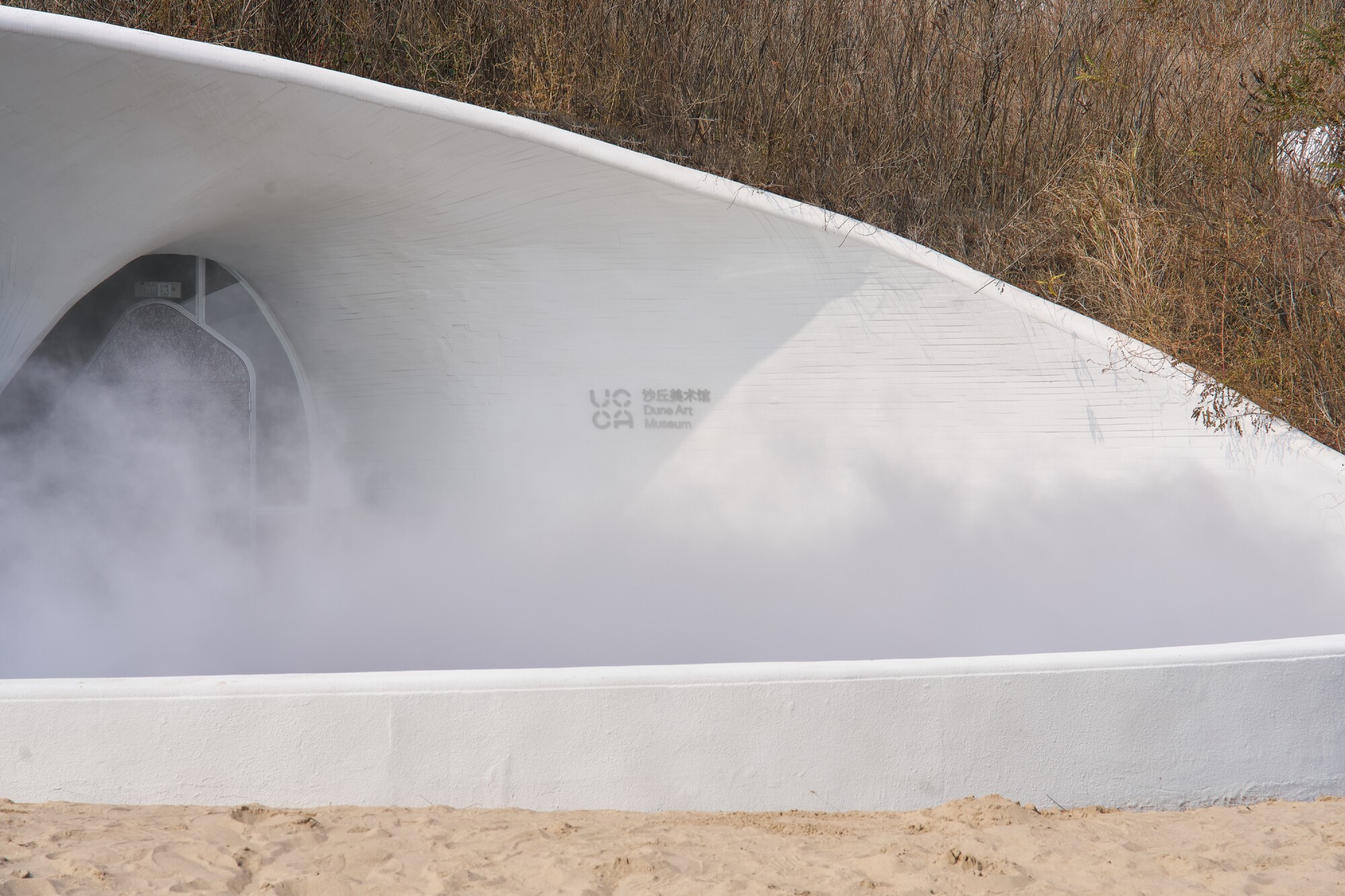
A major new work commissioned by UCCA, Vapour (2026) has been created by Paterson specifically for the outdoor galleries. Bringing together over 1,000 waters collected from across the planet, the work encompasses glaciers and ancient ice, oceans, rivers, springs, deep aquifers, rainforests, polar seas, monsoon rains, mist, fog, and dew. These waters, each carrying its own geological, ecological and cultural histories, are combined and transformed into a fine mist that visitors can walk through and breathe. The fog gathers, shifts and disperses across the museum’s outdoor terraces towards the sea, briefly bringing together waters from vastly different places and times before returning them to the atmosphere and the Earth’s continuous water cycle.
In the stairwell leading to the museum’s rooftop terrace, Light bulb to Simulate Moonlight (2008) offers another way of experiencing light. Working with lighting engineers, Paterson analyzed the spectral properties of moonlight to create a light bulb that reproduces its unique characteristics, bringing the light of a moonlit night into the gallery. On the rooftop terrace, visitors encounter Paterson’s ongoing “Ideas” series (2015–). These short, haiku-like sentences describe imagined artworks that may one day be realized or remain forever in the realm of imagination. Here, 100 “Ideas” are spoken in English and Mandarin, drifting through the rooftop garden. The artist’s texts surface briefly in sound before dissolving again, appearing and disappearing like fleeting thoughts. Freed from the page and transformed into faint, almost imperceptible voices in the air, Paterson’s expansive world of imagination enters the space in its most delicate form.
From a diamond and a slender branch to a fragmentary melody and mist that gathers and disperses with the wind, Paterson continually finds tangible forms for dimensions of time and distance that are difficult to perceive directly. Billions of years of geological and cosmic history are no longer abstract measures but enter visitors’ experience through fossils, light, scent, sand, and water. At UCCA Dune, situated by the sea and continually exposed to sunlight, wind, and moisture in the air, these works resonate with the surrounding natural environment. Here, deep time is no longer an abstract concept pointing toward a distant past, but something present in the here and now. The exhibition invites visitors to begin with the fleeting span of an individual existence, look back across Earth’s long history, and gaze outward into the vastness of the cosmos, reimagining the connections between humanity, nature, time, and the world.
Support and Sponsorship
UCCA thanks the British Council for their special support. Exclusive wall solutions support is provided by Dulux. UCCA also thanks the members of UCCA Foundation Council, International Circle, and Young Associates, as well as Lead Partners Aranya, Dior, and The Donum Estate, Presenting Partner Bloomberg, and Supporting Partners AIA, Barco, Dulux, Genelec, SKP Beijing, Stey, and Wanbo Media Group.
Public Programs
To accompany Katie Paterson’s first institutional solo exhibition in China, “Across Deep Time,” UCCA will present a series of public programs, including an opening guided tour, a Conversation, and workshops. Across these programs, audiences can learn more about the artist’s use of materials such as fossils, tree ash, light, and scent, and how her research in astronomy, geology, and ecology informs her artistic practice.
On the first day the exhibition opens to the public, artist Katie Paterson and curator Zhang Yao will jointly lead an opening guided tour. The tour will follow the artist’s path from individual materials and natural phenomena to the vast expanses of geological time and outer space. Paterson will also discuss the site-specific works she has created for UCCA Dune, including the ways in which Beidaihe’s distinctive light, winds, and coastal landscape enter the works and become part of their creation.
The following day, the artist will present a Conversation at the UCCA Beijing Alcove, looking back at nearly two decades of artistic practice. Drawing on her research in astronomy, geology, and ecology, she has found ways to give form to subjects that are otherwise difficult to grasp, whether through a beam of light, a sound, a scent, or a simple gesture. This will be followed by a discussion with curator Zhang Yao about the long-term research behind her work and the possibilities of art as a method of approaching phenomena beyond direct observation. From forests and stars to the dust that existed before the solar system formed and geological processes spanning billions of years, the Conversation will consider how immense spans of time and space can take shape in a single material or moment—and how this can change the way we see the natural world and our place within it.
Workshops throughout the exhibition period will offer a closer look at Paterson’s creative methods from the perspective of materials. Focusing on mineral pigments, star maps, scent, and other sensory experiences, the workshops invite participants to engage with dimensions of time and space beyond direct observation, and to explore through hands-on activities the connections between matter, nature, and the cosmos.
About the Artist
Katie Paterson (b. 1981, Scotland; lives and works in Scotland) holds a BA (Hons) from Edinburgh College of Art and an MFA from the Slade School of Fine Art, London. Paterson collaborates with scientists and researchers across the world on projects that consider our place on Earth in the context of geological time and change. Her artworks use sophisticated technologies and specialist expertise to stage intimate, poetic, and philosophical engagements between people and their natural environment. Combining a Romantic sensibility with a research-based approach, conceptual rigor, and minimalist presentation, her work collapses the distance between the viewer and the most distant edges of time and the cosmos.
Paterson has broadcast the sounds of a melting glacier live, mapped dead stars, compiled an archive of darkness from the depths of the Universe, created a light bulb to simulate moonlight, and sent a recast meteorite back into space. Understated in gesture yet monumental in scope, her work elicits feelings of humility, wonder, and melancholy.
Paterson has exhibited internationally, and her works have been included in major exhibitions at Turner Contemporary, Hayward Gallery, Tate Britain, Kunsthalle Wien, MCA Sydney, Guggenheim Museum, and the Scottish National Gallery of Modern Art. She won the Visual Arts category of the South Bank Awards and is an Honorary Fellow of Edinburgh University.
About UCCA Dune
UCCA Dune is an art museum buried under a sand dune by the Bohai Sea in Beidaihe, 300 kilometers east of Beijing. Designed by OPEN Architecture, its galleries unfold over a series of cave-like spaces. Some are naturally lit from above, while others open out onto the beach. UCCA Dune presents rotating exhibitions in dialogue with its unique site and space, with a particular focus on emerging Chinese and global talents. Opened in 2018, UCCA Dune is supported by UCCA strategic partner Aranya, the seaside cultural and lifestyle community where it is located.
UCCA Beijing
Open Today, 10:00-19:00 (Final entry: 18:30)
798, No. 4 Jiuxianqiao Lu, Beijing
Tel: +86 153 1170 8837
UCCA Dune
Open Today, 9:30-18:00 (Final entry: 17:30)
Aranya Gold Coast, Beidaihe
Tel: +86 335 7522 652
UCCA Clay
Closed Today, 9:00-18:00
West Entrance, Creative & Cultural Ceramic Avenue, Dingshu Town, Yixing City, Wuxi City, Jiangsu Province
Tel: +86 0510 8767 9989